Oswald Rivera

Author, Warrior, and Teacher

Author: Oswald Rivera (page 61 of 85)

Pork Chops Supreme

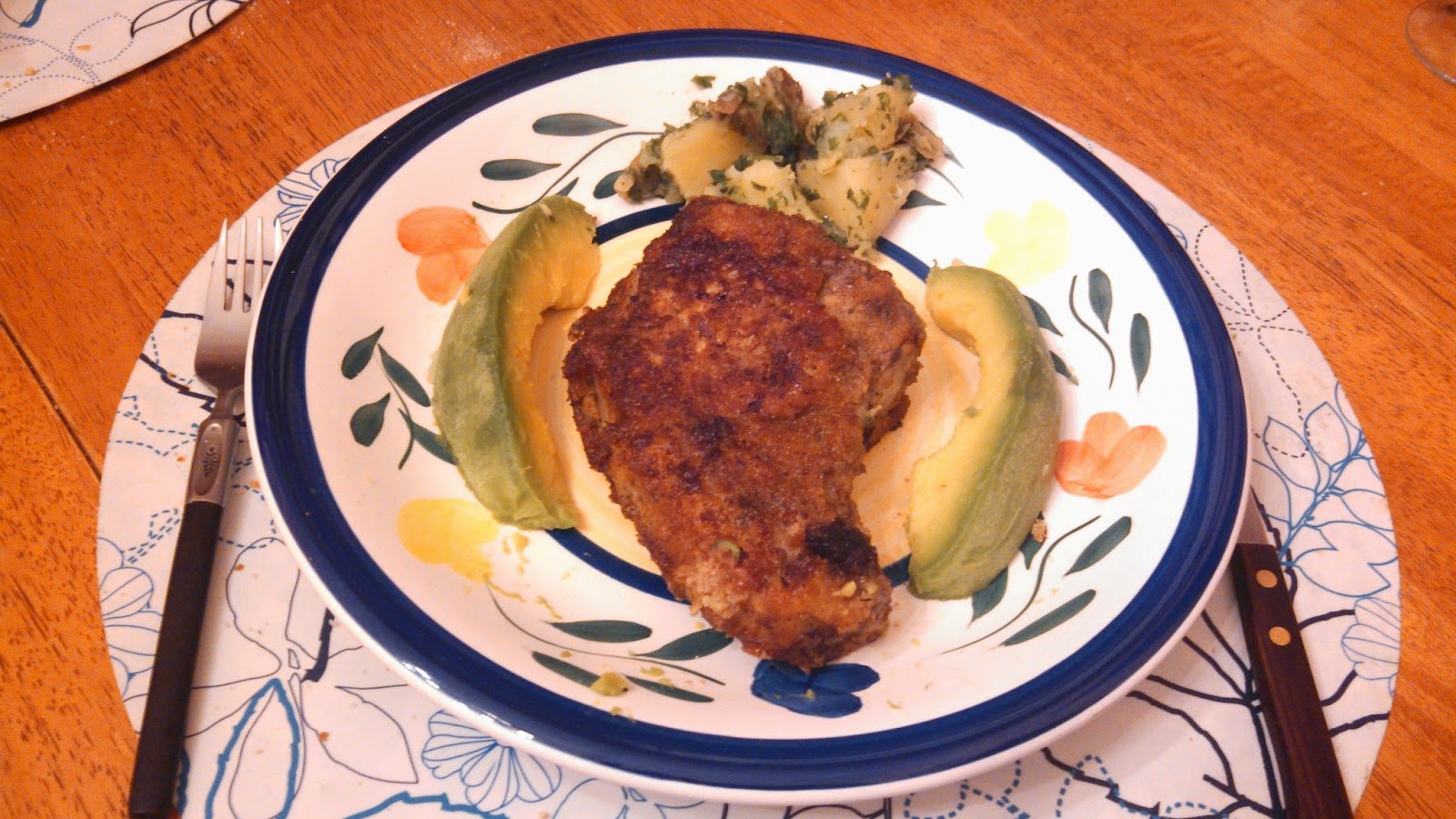
I got this recipe out of a cookbook which I acquired years ago. It was an old cookbook from 1968: Quick and Easy Dishes – Favorite Recipes of Home Economics Teachers. Remember “Home Economics?” Is it taught in the schools anymore? Anyway, this recipe caught my eye. It was simple enough: pork chops, salt, pepper, onion and tomato. I modified it in that I added cheese, olive oil, oregano garlic, and parsley. You could say I’ve made them Nuyorican Supreme Pork Chops.

PORK CHOPS SUPREME

4 pork chops, about 1 inch thick
4 tablespoons olive oil
3 cloves garlic, peeled and finely mince
1/4 teaspoon dried oregano
Salt and freshly ground pepper to taste
4 slices tomato
4 slices cheese, preferably a goat cheese like Manchego (but you can substitute Pecorino, Romano, Parmesan, 
   or other)
2 tablespoons fresh chopped parsley

1. Preheat oven to 350 degrees.
2. Wash chops under cold running water, and pat dry with paper towels.
3. In a small bowl, combine the olive oil, garlic, oregano, salt and pepper.
4. Rub the seasoning into the meat.
5. Place chops in a baking pan or dish. Top with a tomato slice. Add enough water to cover bottom of pan. Place in oven and bake for one hour. 
6. Top each chop with slice of cheese. Transfer to broiler part of oven and broil 1-2 minutes until cheese melts.
7. Sprinkle with parsley and serve.
    Yield: 4 servings.

Grilled Marinated Mint and Mustard Lamb

It’s the waning days of summer, but we’re still grilling. One of my favorites is grilled lamb; which is a change from the usual barbecue steaks, hotdogs and burgers. But how to do it? Lamb offers so many possibilities. One of them is marinated lamb. My favorite method to grill lamb is just to prepare it highly seasoned with salt, pepper, oregano, and olive oil. However, recently I came across a recipe where the marinade consists of fresh mint and mustard. I love mint, and I love mustard. I was in heaven. As with any marinade, it’s best to marinate the lamb at least for four hours or, preferably, overnight. The rest is a snap—grill until done.

GRILLED MARINATED MINT AND MUSTARD LAMB

1 red onion, peeled and chopped
1 bunch mint leaves (reserve 1/4 cup finely chopped leaves)
2 tablespoons dry or regular mustard
1/4 cup olive oil
1 4-5 pound leg of lamb, trimmed, but with a thin layer of fat kept on (I know, it’s fat but, guess what,
   that’s what gives it the flavor. get over it.)
1/2 stick butter
4 cloves garlic, peeled and finely minced

Salt and freshly ground black pepper to taste

1. Puree the onion, mint leaves and mustard in a food processor. While the processor is running, add oil in a slow and steady stream.
2. Place lamb in a large zip-lock bag and pour in the marinade. Refrigerate for at least 4 hours or, preferably, overnight, turning the bag from time to time to distribute the marinade.
3. On the day of grilling, combine the butter, garlic, chopped mint, salt and pepper in a small saucepan or skillet. Warm over low flame until the butter melts. Set aside.
3. One hour before grilling, let the lamb sit at room temperature. If using charcoal briquettes, prepare an intense fire on half of the grill. If using a gas grill, heat to high.
4. Remove lamb from the marinade and place on the hot portion of the grill. Cook until browned (6-8 minutes). Turn and cook for 5-7 minutes more.
5. Move the lamb to the cool side of the grill and brush with the butter-mint mixture. Cover the grill and cook until the internal temperature reads 125 to 130 degrees (for medium rare). This usually takes 24 to 30 minutes more, turning and basting with the butter-mint mixture occasionally.
6. When done, place on a warm serving platter and let sit for 15 minutes before serving.
     Yield: 8-10 servings.

Camarones en Escabeche – Pickled Shrimp

Pickled shrimp, marinated shrimp, take your pick. In our culture it’s all the same. Escabeche refers to placing cooked (or partially cooked) seafood into a marinade. That’s where the pickling comes in. In  Criollo (Puerto Rican cuisine) we pickle fish, usually swordfish or kingfish steaks, and  shrimp. In terms of fish steaks, we cook them first in olive oil, and then marinate them. Shrimp follow the same pattern in that we first boil them lightly and then proceed with the marinade.

A basic Criollo marinade consists of olive oil, red onions, garlic, pimento stuffed Spanish olives, oregano, cilantro, and fresh lime juice. We mix it in a bowl, add the par-boiled shrimp and let the thing sit overnight, and that’s it.. In Spain, they do it differently, and that’s the recipe given below. They omit the Spanish olives, oregano, cilantro, and lime juice. In a way, it’s a simpler recipe. The only other difference is that bay leaves, garlic and peppercorns are simmer first, then added to the marinade ingredients. In all cases, par-boiling, followed by marinating gives the shrimp their tender-firm texture. We serve pickled shrimp with steamed rice. That’s the favorite accompaniment. With a bottle of sauvignon blanc or soave, it can’t be beat.

CAMARONES EN ESCABECHE
             (Pickled Shrimp)

1 small red onion, peeled, halved lengthwise and thinly sliced cosswise
1/2 cup red wine vinegar
1 teaspoon dried oregano
1/4 teaspoon salt
1/2 cup olive oil
2 bay leaves
3 cloves garlic, crushed
1/4 teaspoon black pepper
2 pounds large shrimp, peeled and deveined (you can leave the tail intact, if desired)

1. In a shallow bowl, mix together the onion, vinegar, oregano, and salt. Set aside.
2. In a small saucepan or skillet, simmer on low the olive oil, bay leaves, garlic and pepper for 10 minutes. Then set aside until ready to use.
3. In a pan or pot, bring 4 quarts water to a boil. Add shrimp and cook on high heat for 2 minutes.
4. Drain and combine in a bowl (or a zip-lock bag) with the onion mixture along with the oil mixture. Mix well.
5. Store covered bowl (or zip-lock bag) in the refrigerator for at least 4 hours or, preferably, overnight. Discard the bay leaves and serve shrimp cold or at room temperature.
    Yield: 4 servings. 

Heirloom Tomato with Swiss Chard and Avocado

Summer is the time to enjoy delicious red tomatoes. In winter, we are bereft. What you see in the supermarket are mealy, bland versions packed in cellophane. They are tasteless and meager. Summer comes, and tomatoes, fresh and ripe, are in profusion again. One of my favorite varieties is heirloom tomatoes. They are plentiful now. The only problem I see with heirlooms is that they have shorter shelf-life than other commercial tomatoes. But that’s no problem in the Rivera household.We eat the tomatoes as soon as we get them, knowing that come winter, we’ll be in the doldrums again.

I use heirlooms in various ways, from sauces to entrees; but mainly in salads, as is called for in this season. Recently I was at the farmer’s market and I saw some Swiss chard. Now, truthfully, I am not familiar with this green. I heard it’s considered one of the most nutritious vegetables around, ranking second only to spinach. And I’m willing to experiment. So I decided to whipped up a tomato and Swiss chard salad, just for the hell of it. And it came out pretty good. To the mix I added an avocado, which are also in profusion right now. The result: an easy, quick and delicious meal. With a crusty bread and a light wine, you can’t go wrong.  

HEIRLOOM TOMATO WITH SWISS CHARD AND AVOCADO

1 bunch Swiss Chard

1/2 cup olive oil
1/4 cup red wine vinegar
Salt and ground black pepper to taste
2 cloves garlic, peeled and finely minced
1/2 teaspoon dried oregano
4 small tomatoes, ripe but firm
1 medium avocado, peeled and sliced
2 tablespoons chopped scallions

1. Rinse the Swiss chard under cold running water; and tear into bite-sized pieces.
2. In a deep skillet or pan, bring 2-3 quarts water to a boil. Add the Swiss chard and cook for 1-2 minutes. Immediately rinse in cold water and drain on paper towels.
3. Make the marinade: in a bowl, combine the olive oil and vinegar. Add salt, pepper, garlic, and oregano. Stir to to mix.
4. Wash the tomatoes and cut into small wedges. Add to marinade and let stand 10-15 minutes.
5. Place the Swiss chard in a platter or salad bowl. Pour some of the tomato marinade over them. Dress by layering tomatoes and avocado. Season with the remaining marinade. Sprinkle with scallions and serve. 
   Yield: 4 servings.

Salmon with Lentils

I’ve long been an aficionado of lentils. I enjoy their taste and the varied ways that they can be used. There’s good reason for their popularity these days, and not just among the vegetarians among us. Lentils, as part of the human diet, have been around for approximately 13,000 years. They come in colors ranging from red-orange to green, to  brown and black; and the cooking time varies from 10 to 40 minutes, depending upon the size and variety. They are a popular staple in the Mediterranean basin, Africa, South and West Asia.

We Latinos usually serve rice with beans (red/black/white). Conversely, in India, Pakistan and Egypt, the rice is mixed with the lentils. In Europe, North and South America, they are popular in soups. That being said, they are also a great source of iron, protein, amino acids dietary fiber, vitamin B, a minerals. Lentils are considered one of the healthiest foods around. Their pedigree is such that they are mentioned in the Christian and Hebrew Bible wherein Esau sells his birthright (i.e. his inheritance) to Jacob for a pot of lentil stew, or a “mess of pottage.” (Note: if you want a good recipe for lentil stew, see my posting of 11/01/11—A Mess of Pottage).

Recently, I decided to mix lentils with salmon, one of my favorite fish variety. The result is the recipe given below. You can cook the fish in an outdoor grill and have it barbecue style. Or you can use the oven broiler. Either way you have a delicious and garlicky (yes, I love garlic) entrée.

SALMON WITH LENTILS

5 tablespoons olive oil (plus more if you’re grilling)
6 cloves garlic, peeled and minced
1 medium onion, peeled and sliced into rings

2 cups lentils (I use green lentils; but other types may be substituted)
4 cups water
1 bay leaf
1 bunch parsley, washed and chopped
1 teaspoon dried thyme

Juice of 1 lemon
1/3 cup fresh basil, washed and chopped
1/4 cup fresh mint leaves, washed and chopped

1/4 teaspoon dried oregano
Salt and ground black pepper to taste
2 pound salmon fillets, cut into 4 equal pieces, skin left on
1/4 cup scallions, rinsed and finely sliced

1. In a medium saucepan, heat 2 tablespoons olive oil. Add 3 cloves garlic and onion; and saute until onion is transparent.
2. Add lentils, water, bay leaf, parsley and thyme. Bring to a boil. Reduce heat and simmer, uncovered, until lentils are tender, about 25-30 minutes. The lentils should be tender but still somewhat firm. Do not overcook. Drain lentils of any extra liquid that may be in the saucepan. Add 1 tablespoons olive oil, remove from heat and set aside.
3. While lentils are cooking, whisk together in a small bowl the remaining garlic cloves, 2 tablespoons oil, lemon juice, basil, mint, and oregano. Add this dressing to the lentils. Stir to mix, and season  with salt and pepper. Set aside and cover to keep warm.
4. Cook the salmon: Preheat a grill or broiler, or prepare a charcoal fire in an outdoor grill. Rub salmon pieces with olive oil and rub with salt and  pepper. Place salmon pieces on grill, skin side down and cook for 5 minutes. Turn over gently with a spatula and cook on the other side, 2-5 minutes until desired doneness. If broiling, broil on one side only until done, 5-8 minutes.
6. Divide lentils among four dinner plates. Arrange salmon pieces over lentils and sprinkle with sliced scallions.
    Yield: 4 servings

Sofrito with Pasta

These days, almost everyone interested in cooking knows about sofrito. It wasn’t always like that. When I was growing up, the condiment was hardly known outside of Hispanic and Puerto Rican enclaves in East Harlem and the South Bronx. My Anglo friends had never heard of it until I mentioned it to them. My Mexican friends stated they had their own version of sofrito, But that’s as far as it went. Then with the culinary explosion that enveloped America from the 1970s on, sofrito was popularized. This aromatic mix of herbs and spices, used as a base for countless Caribbean dishes, became the darling of innovative cooks everywhere.

As I  demonstrated in my video on the topic (7/10/14), sofrito is an easy mix to conjure up. In my culture we use it for flavoring stews, casseroles, soups, meat, poultry, seafood, you name it. However, I got to thinking: what about combining it with one of my favorites—pasta? Has it even been tried? In recent years the talk has been about “fusion cuisine.” Well, what would be more daring than sofrito with linguini, or rigatoni, or penne, macaroni— whatever brand of pasta you like, be it strand or tubular?

So recently I set myself an experiment, and decided to combine sofrito with a pasta type. In this case, perciatelli. I love perciatelli. It looks like spaghetti but it’s slightly chunkier, more like a cable than a strand. As my father woulds say, “It’s a manly-man pasta!” No angle hair in this family. Not that there’s anything wrong with angel hair or other fine pasta. Just that perciatelli (like fettuccine) sticks to the ribs. Anyway, if you don’t want percialtelli, use whatever pasta suits your taste.

Naturally, in all of this, the main ingredient is sofrito. And a basic recipe for sofrito would include 1/2 cup parsley or 12 whole leaves recao (a small green stemmed  herb found in Hispanic, Oriental, or Indian markets); 1/2 cup of cilantro; l  medium green bell pepper, chopped; 2 cloves garlic. crushed; 1 medium onion, coarsely chopped; and 1/4 pound sweet chili peppers (also known as aji dulce–but they’re sweet, not hot and spicy. They’re sold loose by the handful or in 1/4 or 1/2 pound packets. A 1/4 pound packet contains about 12 peppers). Combine all the ingredients in a blender or food processor, with 1 tablespoon olive oil, and puree until it has a smooth, sauce-like consistency. This will yield about 1 1/3 cups of sofrito. You can store the sofrito in a closed jar or container in the fridge for 3-4 days, on in the freezer compartment indefinitely.

SOFRITO WITH PASTA

2 tablespoons olive oil
1/3 cup sofrito
3 tablespoons tomato paste
1 pound ground beef, turkey, or chicken
1 medium zucchini, sliced into 1/4-inch sticks about 1-inch long
1/2 cup water or chicken broth
Salt and ground black pepper to taste
1 pound perciatelli (or any other pasta—your choice), cooked according to package directions
2 tablespoons fresh, chopped parsley

1. Heat olive oil over medium heat in a large skillet or pot. Add sofrito and tomato paste, and cook, stirring constantly with a wooden spoon, about 2-3 minutes.
2. Add ground beef or poultry and cook until meat loses its red color (5-7 minutes). Again, stirring frequently to break up any lumps in the meat.
3. Add the zucchini, stir to mix. Season with salt and pepper. Add the water or chicken broth, cover, and simmer on low heat for 20 minutes. Check periodically: if the meat becomes too dry, you can add more water or chicken broth.
4. Add the cooked pasta. Stir to combine, sprinkle with the parsley, and serve.
    Yield: 4-6 servings. 

Crabmeat Salad

Summer time is salad time. And in that vein, one of my favorite is crabmeat salad. The easiest thing to make during these dog days. Most of the ingredients are right at hand. The recipe given can be served as an appetizer or dinner salad. I’ve done crabmeat salad many times; but this time around I had some fresh basil lying around, and I added that to it. It made for a good mix. Along with a carrot, onion, lemon juice, herbs , and the ubiquitous mayo and mustard, you have yourself a great salad. Served on a bed of lettuce, and with a good hunk of bread, and some white wine, you have a great summer meal.

CRABMEAT SALAD

2 6-ounce cans crabmeat, drained and flaked
1 carrot, peeled and shredded
1/2 medium red onion, diced
1/4 cup chopped fresh basil
1 teaspoon fresh oregano leaves or 1/2 teaspoon dried
1/2 cup mayonnaise
1 teaspoon Dijon mustard
Juice of 1/2  lemon
Salt and ground black pepper to taste
Bibb or Boston lettuce  leaves

1. In a medium bowl, mix and toss lightly the crabmeat, carrot, onion, basil, and oregano.
2. In a small bowl, mix together the mayonnaise, mustard, and lemon juice.
3. Add the mayonnaise dressing to the crabmeat and stir to combine. Season with salt and pepper, and serve on a bed of lettuce. If using at a later time, you can refrigerate the crabmeat salad until ready to serve.
    Yield: 4-6 servings, depending on whether it’s served as an appetizer or dinner salad.

Sofrito: Spanish Rice Video

Check out the new video:

Adobo

Adobo, along with sofrito and achiote, is a magic word to those of us whose forbears hail from the Caribbean. It is an indispensable item in our cuisine. At its basic it’s simply a mix of black peppercorns, oregano and garlic. In the old days these ingredients were crushed in a mortar and the mix was rubbed thoroughly into meat, fish or poultry. That’s still the way it’s done by purists (and yours truly). Back on the block, most people just sprinkled the meat with ground pepper, ground garlic, dried oregano and, sometimes, onion powder, then marinated it in olive oil and vinegar. Others, like my Uncle Phillip, preferred fresh lime juice to the vinegar. And there were no strict guidelines. We all did it by eye measurement and repetition.

Since then, I’ve discovered that adobo is not solely a Puerto Rican or Caribbean thing. In the town of Puebla, in Mexico’s central range, they have a version of adobo that is a paste of ancho chiles, garlic, peppercorns and cumin seeds. And they normally use it when cooking pork. This is interesting, since in some Puerto Rican versions of adobo , they may also add cumin seeds. In my family we didn’t add cumin seeds. We just kep it to the basics.

When I was growing up in Spanish Harlem, no one knew about adobo outside my neighborhood. It was well known in the Dominican enclaves on upper Broadway, but that’s as far as it went. As adobo was popularized by assorted gourmands and gourmets, it was, like all else, commercialized. So that today you can find it in a jar in any store. It’s convenient but, if you want the real thing (and not just something with chemicals and preservatives), you can make your own adobo quickly and efficiently. And it’s far more tasty and healthy than the store-bought stuff. The recipe given below is the one we’ve been using in my family for generations. You can go the traditional method and use a mortar and pestle to grind the ingredients, or  not. Also note that the ingredients can be doubled or tripled, if you want more. Just store the remainder in an air-tight container away from heat and light or in the fridge.    

ADOBO

1/2 teaspoon freshly ground pepper or 8 whole peppercorns, crushed
1/4 teaspoon salt
1/2 teaspoon garlic powder or three cloves garlic, peeled and crushed
1/2 teaspoon dried or fresh oregano
1/4 teaspoon onion powder (optional)

If using fresh peppercorns and garlic, just combine with other ingredients and crush in a mortar. If not, just combine all ingredients in a bowl. Another variation is to heat the salt and peppercorns in a dry skillet on medium heat until the spices are lightly toasted (about 3 minutes). Then combine with the other ingredients and grind in a blender or spice mill. Some say this renders a more fragrant adobo. In the Rivera family we just mix the ingredients and forego the frying part. Your choice; and enjoy! 

Fish Fillets with Lemon and Capers

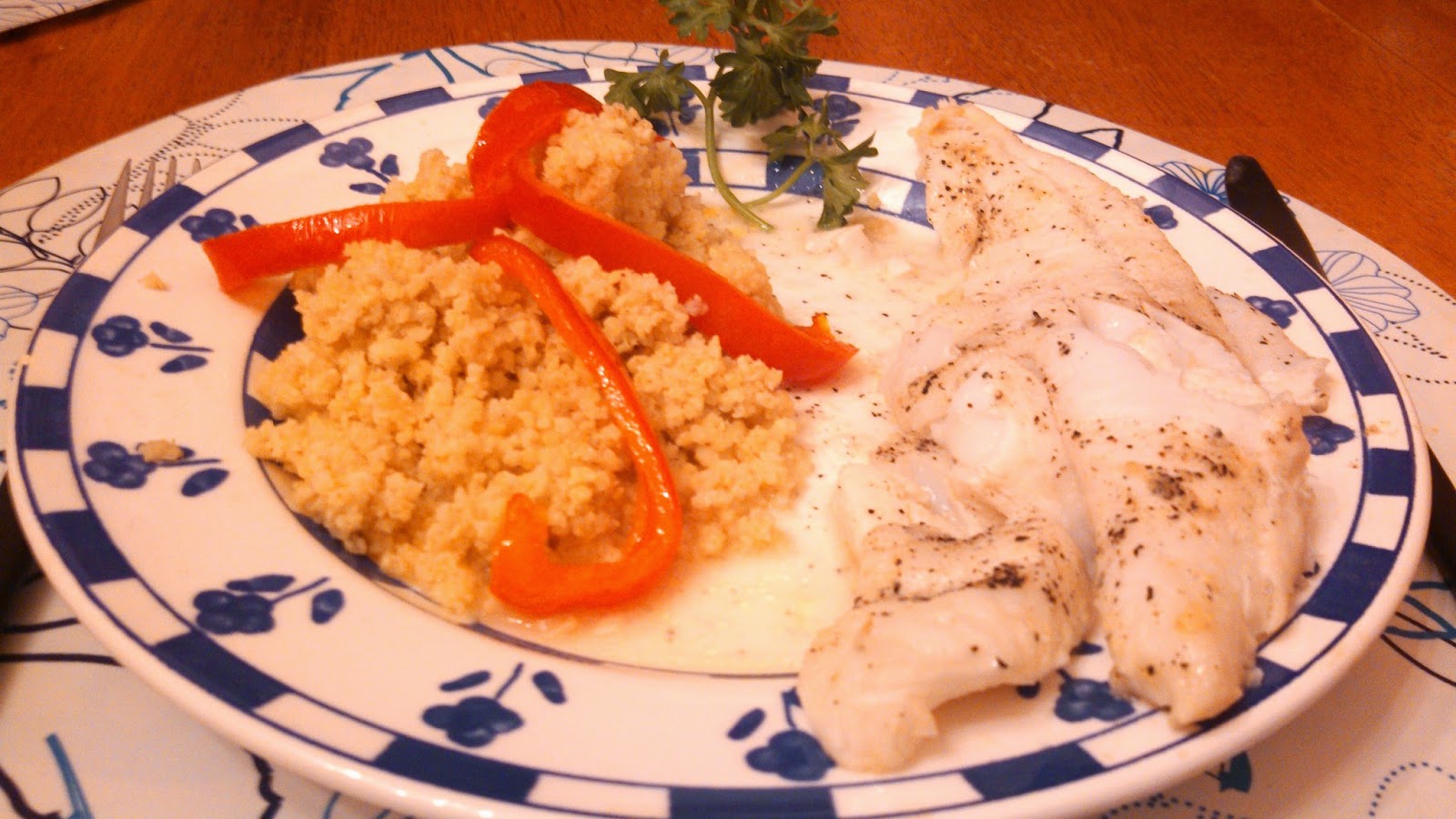
I’m told that one of the first things they teach in cooking school is preparing a dish “meunière” style. I’ve never been to cooking school but its seems we in the Rivera family have been cooking “meunière” style all along. It’s simply dipping fish fillets (or a whole fish) in milk, coating with flour, and frying. A variation of this is meunière with lemon and capers. This is called grenobloise style. My mother had been preparing fish like this for years without knowing of its highfalutin background. In French classical cuisine they use mainly an unflavored oil such as peanut or corn oil for the frying. Given our Latin roots, we in the Rivera clan use olive oil.

What’s great about this dish, whatever you want to call it, is its simplicity. It’s one of the most basic of entrées. Boiled potatoes is the classic accompaniment to this dish, but you can serve it with rice or pasta, or any other preferred grain.  With a crusty piece of bread, it’s the best thing around.

FISH FILLETS WITH LEMON AND CAPERS

4 boneless fish fillets, such as haddock, cod, flounder, turbot, ext. (about 1/4 pound each)
1/2 cup milk
1/2 cup flour
Salt and ground black pepper to taste
1 tablespoon chopped fresh oregano or 1 teaspoon dried
1/2 cup olive oil
Juice of 1 lemon (plus three-four thin lemon slices for garnish)
6 tablespoons butter
1/3 cup drained capers
2 tablespoons finely chopped fresh parsley

1. Rinse the fillets under cold running water and pat dry with paper towels.
2. Place the fillets in  shallow dish and add the milk. Turn the fish to coat evenly with the milk.
3. Place the flour in another shallow dish and season salt, pepper, and oregano. Dredge each fillet in the flour; and shake to remove excess flour from the fish.
4. Heat the oil in a large skillet (I prefer cast-iron), and cook the fillets over moderate to high heat about 4-5 minutes until golden brown on one side. Turn and cook until golden brown on the other side. As the fish cooks, baste with the oil in the skillet. Total cooking time is about 10-15 minutes.
5. Remove the fillets to a warm serving dish. Sprinkle with the lemon juice.     
6. Pour off the oil from the skillet, and wipe the skillet with a kitchen towel or paper towel. Heat the butter in the skillet over medium heat until it starts to brown. Add the capers and cook about 15 seconds. Pour the butter sauce with the capers over the fish fillets. Sprinkle with the parsley. Garnish with the lemon slices, and serve.
    Yield: 4 servings.

Older posts Newer posts

© 2026 Oswald Rivera

Theme by Anders NorenUp ↑