Back on the block, when I was growing up, cilantro was a sometimes exotic ingredient. None of our Anglo friends knew about it. The was the 60’s and 70’s, of course, before the American palette took off when James beard and Julia Child came on the scene. We knew of a few folks who used “culantro” or “Chinese parsley” as it was called. In Indian cuisine it was known, then and now, as coriander. But the go-to herb was parsley, either regular or Italian.
A generation later, all that has changed. Cilantro can be found everywhere. No longer reserved for Asian markets. The local supermarket carries it. And recipes highlighting it abound. Still, in my circle at least, one either loves it or hates it. Admittedly, it has a flavor that takes time to appreciate. Thus, I always experiment so as to make it palatable for those who shun it.
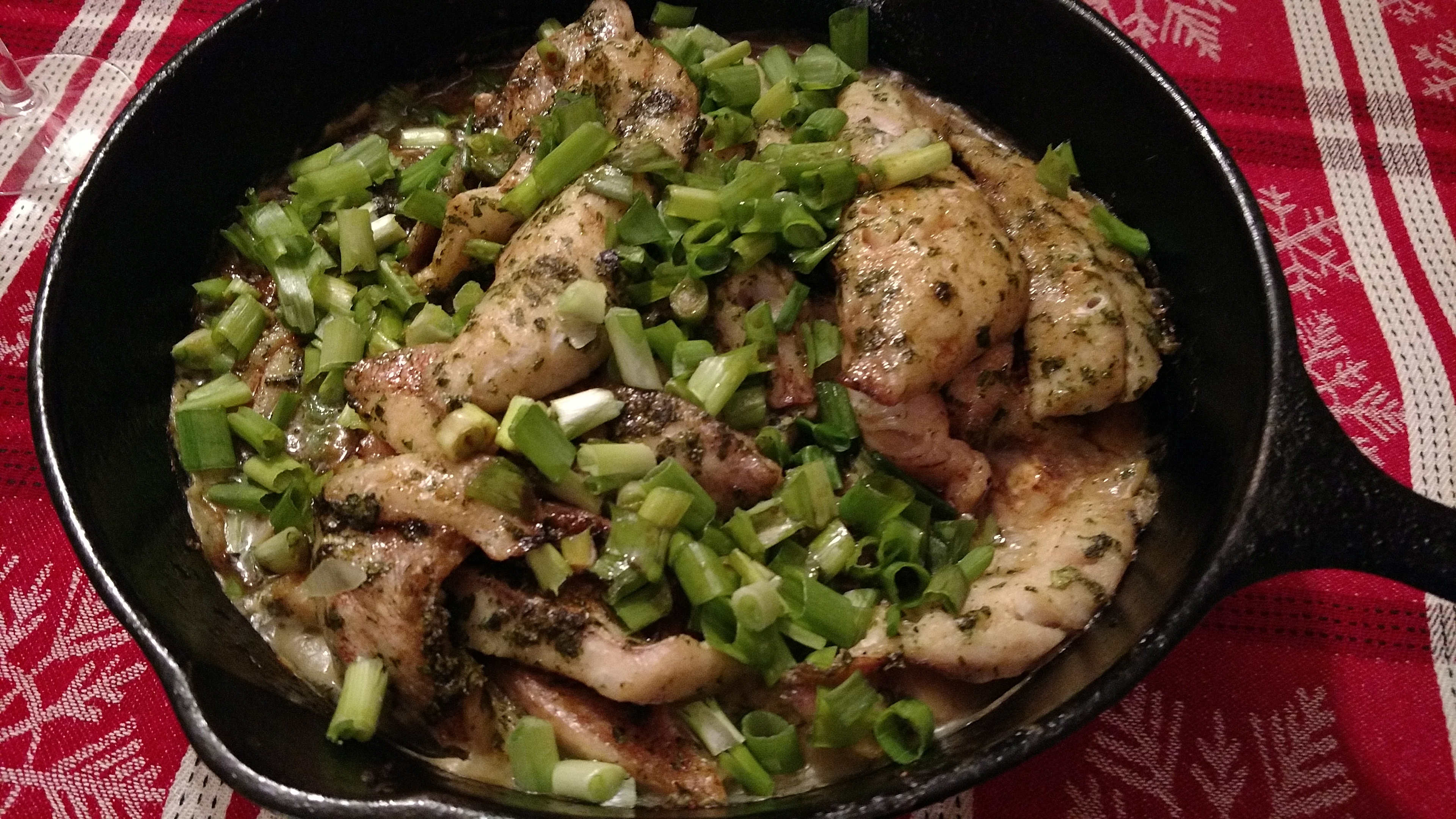
Recently I experimented with it in terms of seafood. How about a dish where cilantro is the main ingredient, but does not overwhelm the seafood? My solution: give it an Oriental slant. In fact, going against tradition, this became our Christmas dinner.
Long before it hit our shores, cilantro was a mainstay in Eastern and Indian cooking. Following this precept, I married the herb with the most commonest of Asian ingredients: soy sauce and sesame oil. The result was fabulous. Even my wife, who is not a fan of cilantro, found the recipe heavenly. So, here it is, Fish Fillets with Cilantro. Be aware that in this effort, any white firm-fleshed fish can use used, cod, halibut, turbot, etc. I used perch fillets (hey, they were wild caught and on sale). The dish itself can be served with rice, or any preferred grain, even pasta. We serve it with tostones (fried green plantains). For a quick tostones recipe, check out my post from 10/16/16.
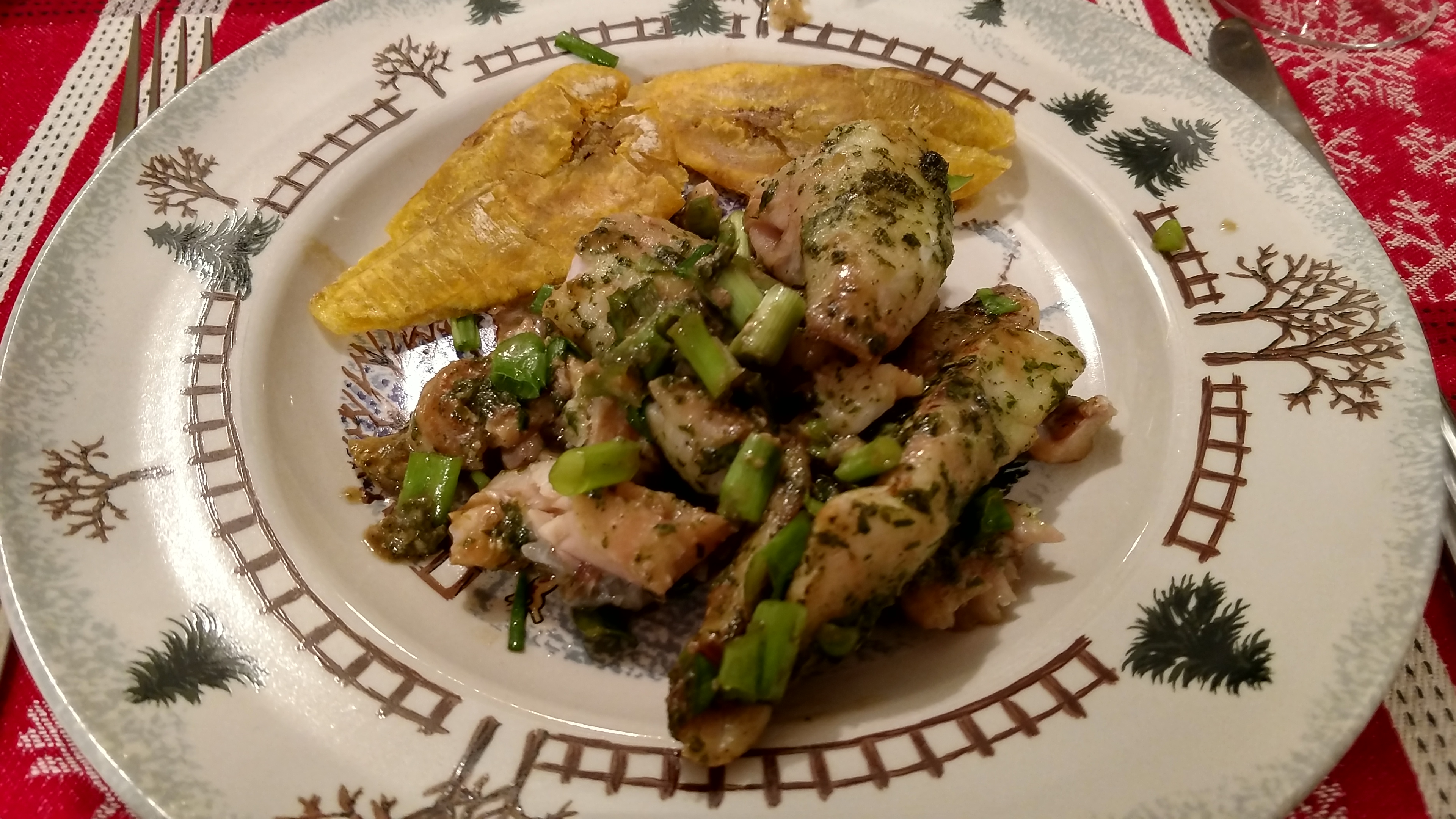
FISH FILLETS WITH CILANTRO
Ingredients:
2 pounds fresh fish fillets (perch, turbot, cod, halibut, turbot, etc.)
For the Marinade:
1/2 teaspoon brown sugar
1 teaspoon freshly ground black pepper
1/4 cup sesame oil
Juice of 1/2 lemon
1 bunch scallions, rinsed and chopped
For the Sauce:
4 tablespoons dry sherry
1 tablespoon sunflower oil
2 tablespoons soy sauce
Garnish:
1/4 cup cilantro leaves, washed and chopped
Instructions:
1. Rinse fillets under running water, and pat dry with paper towels. Place in an ovenproof dish ( I prefer cast-iron).
2. Combine all marinade ingredients in a cup or small bowl, and pour over fillets. Set aside and let it marinate for 15-20 minutes. Meanwhile preheat oven to 375 degree F.
3. Place fillets in oven and bake for 1/2 hour or until fish flakes easily with a fork. Turn off heat but keep fish warm in the oven.
4. Combine all sauce ingredients in a small pan and bring to a boil. Remove fillets from oven, scatter chopped cilantro over fillets and pour sauce over it.
Yield: 4 servings.


 I do not know what salmorejo means. Neither does anyone else in my family. My Uncle Carlos surmised that it was a word native to Puerto Rico that can be roughly translated as a “salad.” Perhaps. There are many crab salmorejo recipes. In some instances, sweet chili and capers are added. Our version is simple and no nonsense. The only liberty I’ve taken is in adding a little white wine. May not be exactly criollo*, but it supplies a bit of dash.
 This dish came along, like many others through experimentation and the process of experimentation doesn’t have to stop here. Fresh parsley can be substituted for the cilantro, if you want a less defined taste. Some folks prefer fresh lemon juice in place of the vinegar. Again, let your palate be your guide. Traditionally, we serve fish steaks with root plants (bianda) or boiled green bananas (guineos).