Oswald Rivera

Author, Warrior, and Teacher

Category: all (page 26 of 77)

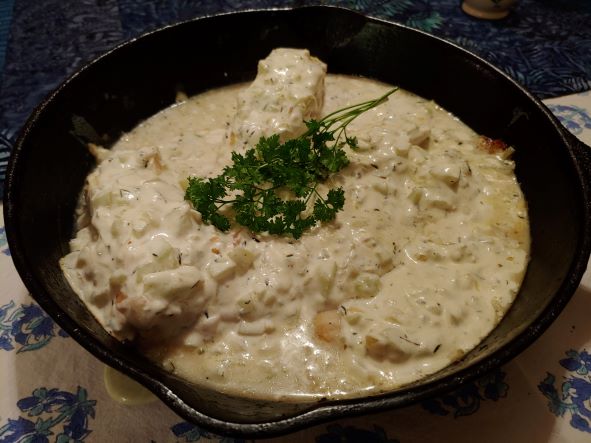
BREADED FISH FILLETS WITH YOGURT

One if my favorite recipes is breaded fish fillets. It’s an easy dish to make, and delicious. Another go-to recipe is fish fillets baked in yogurt (or a combination of yogurt and parmesan cheese). So I considered, why not combine breaded fish with yogurt? In this case, the yogurt is mixed with turmeric. This renders a nice sauce in which to cook the fillets. You’ll be amazed at the result. It is really good. This is a multi-dimensional dish that can be served by itself with some crusty bread, or with rice  or pasta.  Add a light red wine or good white wine, or even beer, and you have a winner.

For this dish you can use any good firm fleshed fillet, be it cod, turbot, halibut,  flounder, monkfish, etc. I would not recommend dover sole. It is just too mild and fragile for this recipe.

BREADED FISH FILLETS WITH YOGURT

Ingredients:

4 fish fillets, 6 ounces each
1 egg, lightly beaten
¾ to 1 cup seasoned bread crumbs
1 tablespoon turmeric
1 cup yogurt

Instructions:

  1. Preheat oven to 375 degrees F.
  2. Rinse fish fillets under cold running water and pat dry with paper towels.
  3.  Place beaten egg in one dish, and breadcrumbs in another.
  4.  Mix turmeric with the yogurt. The turmeric will give the yogurt a pinkish color. Set aside.
  5.  First, dip fillets in egg, and then in breadcrumbs to coat thoroughly. Place fillets in a greased baking dish. Cover with turmeric-yogurt mix,  and bake until tender, about 25 minutes.
    Yield: 4 servings.

ORZO WITH BEANS AND SAUSAGE

This is another take on that famous Italian entry known as pasta fazool. In more renowned circle, it’s Pasta e Fagioli, or pasta with beans. In the post of 04/26/20 I gave my version of this classic dish. In my family, we prefer white kidney beans when we’re making this recipe. Still, we’re always experimenting and seeking to improve on it. And now we have another version: this time with red kidney beans and sausage. In this entry, the pasta base we’re using is orzo. That singular item that, to us, most resembles rice. And, yes, in past efforts we’ve used rice instead of pasta for this dish.

We prefer to use dried beans instead of the canned variety. True, it’s more effort in that you have to prepare the beans for cooking. This entails soaking overnight a one pound package of beans  in water to cover (by at least 2 inches). Next morning, draining the beans then placing in a heavy kettle or Dutch oven with 2 quarts (8 cups) water. Bring it to a boil, cover and cook over moderate-low heat until beans are tender (about 1 hour).  Now, because of time constraints and convenience, you can substitute 2 (15.5-oz.) cans of red kidney beans. We won’t fault you for that. But, again, it does not match the flavor you get from regular beans.

Note that this dish includes sausage. We prefer the sweet Italian type. Yet you can substitute any pork sausage, or even chicken or turkey sausage. If you’re health conscious, you can use organic vegetable sausages that have appeared in markets in the last few years. Be aware that some sausages come with a casing that has to be removed before cooking.

ORZO WITH BEANS AND SAUSAGE

Ingredients:

1 pound package dry red kidney bean
3 tablespoons olive oil
1 (12 oz.) pack sweet Italian uncured sausage, cut into ½-inch pieces
1 medium onion, peeled and sliced into thin rings
2 clove garlic, peeled and minced
1 teaspoon dried oregano
Salt and ground black pepper to taste
1 (8 oz.) can tomato sauce
1 (16 oz.) package orzo

Instructions:

  1. Prepare beans by soaking overnight; and then cooking as instructed above.
  2.  While beans are cooking, heat olive oil over moderate-high heat in a frying pan or skillet. Add sausage and onion and cook for 2 minutes. Stir in garlic and cook 2 minutes more.
  3.  Add sausage mix to beans. Season with oregano, salt and pepper. Stir in the tomato sauce, cover and cook until beans are tender.
  4.  While beans are being done, prepare orzo as per package directions. Serve beans and orzo side by side; or you can serve orzo in a large serving dish topped by beans and sausage. Also, if desired, sprinkle with grated Parmesan cheese.
    Yield: 6 to 8 servings.


POLLO CON POLVO DE CURRY (Curried Chicken)

According to family historians the origin of this dish is Trinidad. My father, during the Second World War, spent time in Trinidad. That my be one of the reasons we acquired this recipe. It calls for curry powder, which is not a common  staple in Nuyorican cooking. That said, the dish is superb, especially for those who like a bit of spice in their dining.

POLLO CON POLVO DE CURRY
(Curried Chicken)

Ingredients:

1 3-to-3½ pounds chicken, cut into serving pieces
2 cloves garlic, peeled
8 black whole peppercorns
Salt to taste
½ teaspoon fresh thyme leaves or ¼ teaspoon dried
½ cup olive oil
2 medium tomatoes, coarsely chopped
1 onion, peeled and thinly sliced
1 hot chili pepper, diced (optional)
1 tablespoon curry powder
2 cups water

Instructions:

  1. Rinse chicken pieces under cold running water and pat dry with paper towels. Place in a bowl
  2.  Put garlic, peppercorns, salt and thyme in a mortar, and pound until crushed. Rub chicken pieces with this seasoning. Cover bowl and let stand at least 30 minutes.
  3.  In a large skillet or frying pan, heat olive oil. Add chicken pieces, two or three at a time, and fry until golden. Remove and set aside.
  4.  Drain all but 2 tablespoons of oil from skillet. Add tomatoes, onion, chili pepper (if using) and curry powder. Sauté for 5 minutes.
  5.  Stir in 2 cups water and bring to a boil. Return chicken to skillet. Cover and simmer over low heat for 30 minutes or until chicken pieces are tender. This dish is best served with bianda (root plans such as yucca, yautía, green bananas, malanga, etc.) or, as we did it, with tostones (friend green plantains).
    Yield: 6 servings.

PAPPARDELLE WITH SALMON

This is one of those spur of the moment recipes that garners accolades. You know what I mean. You check the cupboard and refrigerator, find out what ‘s available and create something magnificent. In this case it was pappardelle pasta and, yes, canned salmon. I know, here we go again, canned salmon. That’s right, the one that comes in tins. My wife, Holly and I, are partisans of wild caught Alaskan salmon. We usually get it fresh but, if we can find it in the canned variety, we scarf it up and buy as many as we possible. It comes in handy for a rainy day.

Now, the pasta we had this time was pappardelle, the ribbon-shaped pasta common in Italy’s Tuscany region. I like pappardelle because, as I term it, it’s a “manly-man” pasta. It’s thick, like fettuccini, or bucatini. Not a girly-man small pasta like angel hair or thin spaghetti. Holly disagrees. She prefers the fine pastas and pigs like me prefer the other stuff.  I answer that I am not a pig. I’m a piglet. Be it as it may, the salmon recipe can go with any pasta you have on hand, not just pappardelle; or any grain, be it rice or other. This dish is quick, has minimal ingredients, and it hits the spot. With some good Chianti and a crusty loaf, you have a feast.

PAPPARDELLE WITH SALMON

Ingredients:

1 package pappardelle (it could be 12 or 16 oz. pack depending on where you get it)
3 tablespoons olive oil
1 medium onion, peeled and slice into thin rings
1 clove garlic, peeled and minced
1 (14¾ oz.) can pink salmon, preferably wild caught
2 tablespoons Dijon mustard
1 tablespoon melted butter

Instructions:

  1. Cook pappardelle as per package instructions.
  2.  While pasta is cooking, heat oil in a pan or skillet over medium-high heat. Add onion and cook for 1-2 minutes. Add salmon and garlic, cook 2 minutes. Stir in mustard and cook about 3 minutes more.
  3.  By this time, pasta should be cooked to your preference. Drain and remove to a serving dish. Top with salmon. Drizzle with melted butter and serve.
    Yield: 4 or more servings.

CRAB BISQUE

This is my version of crab bisque. As we know, bisque is a creamy soup of French origin. The most common is lobster bisque. This time I decided to make crab bisque simply because I had some canned crab meat on hand. I know, the perfectionist among you are probably screaming, “Canned crabmeat? Sacrê bleu, what a travesty!” Well, get over it. The canned product can be just as good given the proper preparation and condiments.

This hearty soup is a bit on the spicy side. That’s  how we like it in our bailiwick. You can always adjust the seasoning as desired.  You’ll notice I do not use heavy cream in this recipe. Just milk and flour; and it comes out just as smooth and creamy. But if you want to make it half milk and half cream, be my guest. With some crusty bread and good Amontillado sherry to wash it down, you have a superb meal.

CRABMEAT BISQUE

Ingredients:

Half a stick of butter
1 medium onion, peeled and diced small
1 cup flour
1 cup dry white wine (can substitute Riesling if you want a sweeter flavor)
1 gallon whole milk
4 cans (4½ oz.) crabmeat or 1½ pound fresh picked crab
Salt to taste
½ teaspoon Herbs de Provence
½ teaspoon paprika
1 teaspoon cayenne pepper
2 lemons zested and juiced
Bunch fresh chives

Instructions:

  1. In a large soup pan, heat butter on medium heat. Add onion  and, with a wire or plastic whisk, cook for 4 minutes. The onion should be translucent. Add flour and mix well. The mixture should look like thin frosting. Cook for 5 minutes.
  2.  Mix in wine and cook until wine is almost gone.
  3.  Slowly add the milk in 3 different batches letting the milk return to a simmer each time. Make sure to add and whisk the milk slowly so you do not get lumps. Mix in the salt.
  4.  Add crabmeat, Herbs de Provence, paprika, cayenne, lemon zest and lemon juice. Mix well. Return soup to a simmer, reduce heat to low and cook, covered, for 30 minutes. Serve with fresh chives on top.
    Yield: 6 or more servings.

STEAK DIANE

This recipe is called Streak Diane Savola. I got it years ago and, honestly, I don’t remember from where. I do know that ‘Steak Diane’ is a dish in what is known as “Continental Cuisine.” According to Wikipedia, it was probably invented in London or New York in the 1930s. According to my research, the fancified Steak Diane contains varied ingredients such as Cognac, mushrooms, shallots, Dijon mustard and heavy cream. This version doesn’t have any of that. In fact, it’s a rather simple sauté with chives’ parsley, Worcestershire sauce and Amaretto Disaronno.

So, wanna really impress family and friends with something that is both retro and delicious? This dish is it. You can lie and tell them you slaved all day to create this majestic effort.

Ingredients:

4 steaks (rib, T-bone, sirloin or other cut)
5 tablespoons butter
1 tablespoon chopped scallions
1 tablespoon chopped chives
1 tablespoon chopped parsley
1 tablespoon Worcestershire sauce
6 tablespoons Amaretto Disaronno

Instructions:

  1. Rinse the steaks under cold running water and pat dry with paper towels.
  2. Heat the butter in a large pan or skillet over medium-high heat.
  3.  Add the scallions and cook until soft. Add the steaks and sear on each side. Add remaining ingredients and sauté until desired degree of doneness.
    Yield: 4 servings.

SOY SAUCE BRUSSELS SPROUTS

In my young manhood, a close friend was Eddie Hor. Let me state that Eddie was bigger than life. He was a recontour, ladies’ man and an exceptional cook. Until I met Eddie, I was never a fan of brussels sprouts. But he made me a convert to the edible bud (which is considered a leaf cabbage). Eddie simply sautéed the vegetable in soy sauce. Something so simple and direct—and it changes the whole flavor of the sprouts. Over the years I’ve tweaked the recipe by adding onion and garlic. It makes for a great vegetarian entrée or side dish to any meal. In the Rivera clan we prefer to serve it over steamed rice, either white or brown rice. It also goes great with couscous, quinoa, or even kasha.

SOY SAUCE BRUSSELS SPROUTS

Ingredients:

1½ pounds brussels sprouts
3 tablespoons olive oil
1 medium onion, peeled and sliced into rings
2 cloves garlic, peeled and minced
1/3 cup soy sauce

Instructions:

  1. Wash and trim the brussels sprouts. Run under cold water, removing any yellow leaves. Then, cut off the stems to help them cook.
  2. Heat olive oil in a large pan or skillet over medium-high heat. Add sprouts and onion and sauté, stirring constantly, for about 5 minutes until sprouts are golden brown. Add garlic and soy sauce and cook 2 minutes more, making sure the brussels sprouts are coated with the soy sauce. If the soy sauce starts to evaporate, you can add more sauce to taste. Serve immediately over rice.
    Yield: 4 servings.

SABLEFISH

Today’s recipe is a meal for a special occasion. It’s sablefish, that species of deep-sea fish common to the North Pacific Ocean. The fish is also known as black cod. Now, let me say it up front, sable is not cheap. It’s one of the kings of fishes in terms of price. Why? Well, another nickname for sable is “butterfish.” That’s because it’s fattier than Pacific cod or halibut, which gives a luxurious mouthful, but milder than salmon or tuna. It  has a creamy white flesh balanced by a black skin that gives the fish a rich buttery flavor and a smooth silky texture. Every bite is heavenly.

Given its pedigree, sablefish it’s best prepared by simple pan-frying. No fancy sauces, preparation or crusting for this sucker. Simple cooking lets you savor the depth of flavor in sablefish. The easiest way to cook is with a simple mix of garlic powder, salt, black pepper and oregano. For the recipe given, I still had some fresh herbs leftover from my summer plantings. They were tarragon, thyme and sweet marjoram, and that’s what I used. If you don’t have fresh, you can substitute dried. And it can be herbs of your choice. You can use sage, dill, rosemary, chives, whatever is available. Cooked in butter, or a butter/olive oil combo, and you have an easy but fabulous dinner.

SABLEFISH

Ingredients:

4 6-ounce sablefish fillets
3 tablespoons olive oil
1 tablespoon fresh chopped tarragon or 1 teaspoon dried
1 tablespoon fresh thyme leaves or 1 teaspoon dried
1 tablespoon fresh sweet marjoram or 1 teaspoon dried
½ teaspoon garlic powder
2 tablespoons butter
3 tablespoons dry white wine

Instructions:

  1. Rinse fillets under cold running water and pat dry with paper towels.
  2.  Brush with 1 tablespoon of the olive oil. Season well on both sides of fillets with the tarragon, thyme and sweet marjoram. Sprinkle with garlic powder.
  3.  In a large skillet or frying pan, heat the butter and reaming 2 tablespoons of olive oil over medium-high heat. Add sablefish fillets and cook about 3 minutes per side. In the end the fish should be golden brown on the outside but opaque white on the inside. Add white wine and cook over high heat, one minute more. Serve immediately.
    Yield: 4 servings.


PORTOBELLOS AND POTATOES

I love meaty portobello mushrooms. Yet, to my experience, the basic portobello rendering is as in hamburgers, using the mushroom instead of hamburger meat.  Yes, nestled between a bun, or two slices of bread, or even a muffin, it is a satisfying meal.  But there’s got to be more to portobellos than just as a faux hamburger. And that gave me the idea of mixing the mushrooms’ with potatoes. The result: a good homey dish. Along with some good crusty bread to mop up the  garlicky mushroom juices, it makes for a great vegetarian entrée; one that even meat lovers will love.

PORTOBELLOS AND POTATOES

Ingredients:

1 pound portobello mushrooms (about 4-5 large ones)
6 cloves garlic, peeled and sliced crosswise, about 1/8-inch thick
3 tablespoons olive oil
1 pound small red potatoes (do not peel)
1 cup water
Salt and ground black pepper to taste
1 tablespoon chopped fresh parsley
1 tablespoon chopped fresh mint

Instructions:

  1. Rinsed mushrooms under cold running water and pat dry with paper towels. Cut into 3/4-inch cubes.
  2. In an 8 or 9 inch skillet or flameproof casserole with cover, combine mushrooms, garlic and oil. Place over medium heat and when mushrooms begin to cook, stir-fry for about 2 minutes. Cover pan and let cook on low heat for 5 minutes, at which point the mushrooms should be quite dark.
  3.  Meanwhile, scrub potatoes and cut into pieces roughly the same size as the mushrooms. Add potatoes to the pan along with the water, salt and pepper. Cover pan and cook at slow simmer over medium heat for about 30 minutes, until potatoes are very tender. Gently stir in the parsley and mint. Simmer, uncovered, 1 minute more, and serve.
    Yield: Serves 2 or 3 as a main course, 4 as an appetizer, side dish or omelet filling.

PESTO EGGPLANT

Even towards the end of summer, there’s lots of fresh basil around in every farmer’s market and greengrocer. Naturally, this brings pesto to mind. It happens we also had this beautiful eggplant fresh from a garden. So I got the bright idea of creating a Pesto Eggplant recipe. The result was nothing less than fabulous; and the recipe is given below. With some crusty bead and a good white wine, or light red (like a Bardolino, Gamay, or Valpolicella), this dish is a winner. You can also serve it over your favorite grain (like rise or couscous), or even over pasta. You won’t be disappointed.

PESTO EGGPLANT

Ingredients:

1 large eggplant (about 1½ pounds), washed, peeled and sliced into ½-inch rounds
3 tablespoons olive oil
Salt and ground black pepper to taste
1 tablespoons fresh leaf oregano, chopped, or 1 teaspoon dried

Pesto Sauce

4 cups fresh basil leaves, rinsed
3 cloves garlic, peeled
½ cup pine nuts (or walnuts)
½  to 1 cup olive oil
1 cup grated Parmesan cheese
freshly ground black pepper to taste

Instructions:

  1. Drizzle olive oil over eggplant slices. Season with salt, pepper and oregano
  2.  Arrange eggplant slices in  large greased baking pan or dish (we prefer cast-iron). Note: If the dish or pan is not large enough, you may  have to layer eggplant slices on dish to accommodate all.
  3.  Bake until tender, about 35 minutes. Top with pesto and bake 5 minutes more.
    Yield: 4 servings.


Older posts Newer posts

© 2025 Oswald Rivera

Theme by Anders NorenUp ↑