Oswald Rivera

Author, Warrior, and Teacher

Category: all (page 48 of 78)

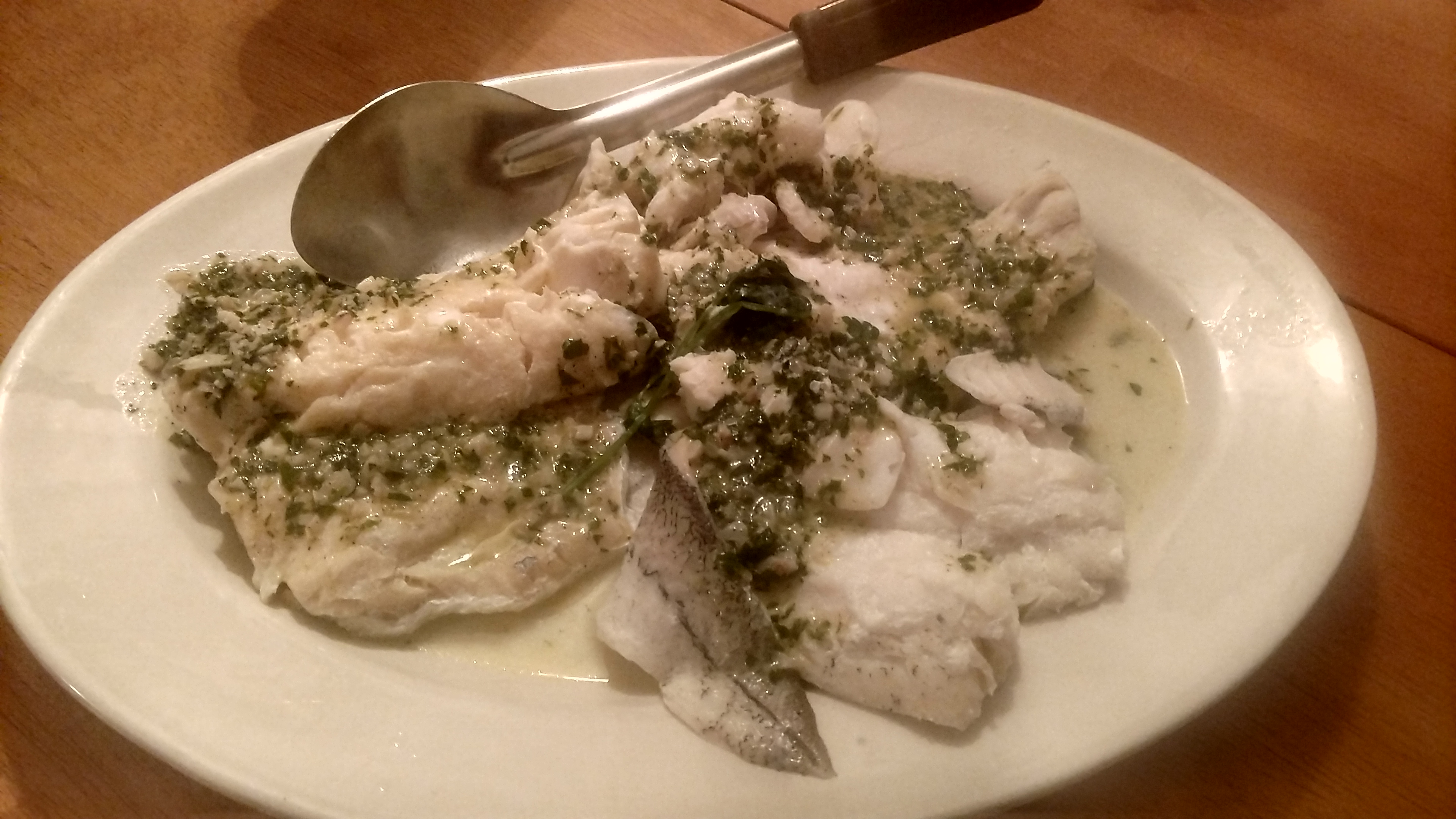
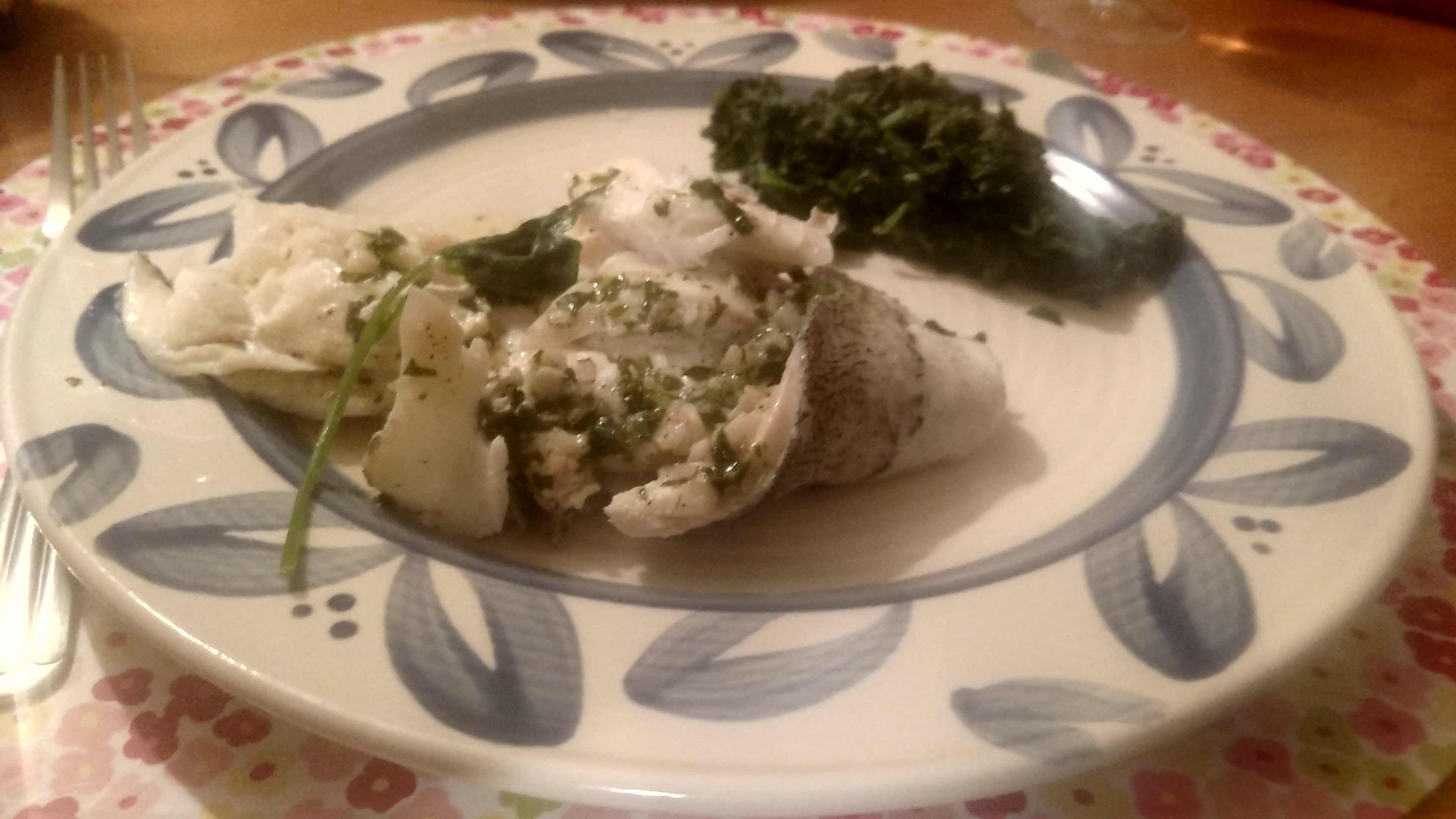
FISH FILLETS WITH CILANTRO

Back on the block, when I was growing up, cilantro was a sometimes exotic ingredient. None of our Anglo friends knew about it. The was the 60’s and 70’s, of course, before the American palette took off when James beard and Julia Child came on the scene. We knew of a few folks who used “culantro” or “Chinese parsley” as it was called. In Indian cuisine it was known, then and now,  as coriander. But the go-to herb was parsley, either regular or Italian.

A generation later, all that has changed. Cilantro can be found everywhere. No longer reserved for Asian markets. The local supermarket carries it. And recipes highlighting it abound. Still, in my circle at least, one either loves it or hates it. Admittedly, it has a flavor that takes time to appreciate. Thus, I always experiment so as to make it palatable for those who shun it.

Recently I experimented with it in terms of seafood. How about a dish where cilantro is the main ingredient, but does not overwhelm the seafood? My solution: give it an Oriental slant. In fact, going against tradition, this became our Christmas dinner.

Long before it hit our shores, cilantro was a mainstay in Eastern and Indian cooking. Following this precept, I married the herb with the most commonest of Asian ingredients: soy sauce and sesame oil. The result was fabulous. Even my wife, who is not a fan of cilantro, found the recipe heavenly. So, here it is, Fish Fillets with Cilantro. Be aware that in this effort, any white firm-fleshed fish can use used, cod, halibut, turbot, etc. I used perch fillets (hey, they were wild caught and on sale). The dish itself can be served with rice, or any preferred grain, even pasta. We serve it with tostones (fried green plantains). For a quick tostones recipe, check out my post from 10/16/16.

FISH FILLETS WITH CILANTRO

Ingredients:

2 pounds fresh fish fillets (perch, turbot, cod, halibut, turbot, etc.)

For the Marinade:
1/2 teaspoon brown sugar
1 teaspoon freshly ground black pepper
1/4 cup sesame oil
Juice of 1/2 lemon
1 bunch scallions, rinsed and chopped

For the Sauce:
4 tablespoons dry sherry
1 tablespoon sunflower oil
2 tablespoons soy sauce

Garnish:
1/4 cup cilantro leaves, washed and chopped

Instructions:

1. Rinse fillets under running water, and pat dry with paper towels. Place in an ovenproof dish ( I prefer cast-iron).
2. Combine all marinade ingredients in a cup or small bowl, and pour over fillets. Set aside and let it marinate for 15-20 minutes. Meanwhile preheat oven to 375 degree F.
3. Place fillets in oven and bake for 1/2 hour or until fish flakes easily with a fork. Turn off heat but keep fish warm in the oven.
4. Combine all sauce ingredients in a small pan and bring to a boil. Remove fillets from oven, scatter chopped cilantro over fillets and pour sauce over it.
Yield: 4 servings.


POLLO CON DOMPLINES


This is a dish that was beloved in our family. My grandmother would make the best dumplings (domplines). And my Mom would make the fried or roasted chicken. My father, my uncles and I would scarf it up. Sometimes we would have the dish three times a week, it was so tasty.

Later in life, when I was either too lazy or pressed for time, I would use store-bought rotisserie chicken rather than make it from scratch. Now, I know, the purists among you are saying, how barbaric! store-bought chicken? Hey, listen guys, there are places nowadays where you can buy organic rotisserie chicken, and it ain’t that expensive. So, for a quick, satisfying dinner, this is it.

For this entrée, my grandma’s dumplings are quick and easy to make, The best ever. However, over years of practice, I’ve discovered that adding a little cornmeal to the basic dumpling mix gives the dish an added dimension of flavor.  As for the chicken, sometimes you may want to liven up the rotisserie bird you get from the store. Thus, I concocted a salsa verde mix to go with the chicken, given it a bit of a Mexican slant. Think the recipe as a Nuyorican dish with a bit of Tex-Mex thrown in.

POLLO CON DOMPLINES
(Chicken with Dumplings)

Ingredients

1 1/2 cup flour
1/2 cup yellow cornmeal
1 tablespoon baking powder
1/4 teaspoon salt
1 small onion, chopped
1/4 cup chopped fresh cilantro (leaves and tender stems)
1 cup whole milk
7 tablespoons unsalted butter
1 cup chicken broth
1 16-oz jar salsa verde (about 2 cups)
1 5-oz can evaporated milk
1 2-3 pound rotisserie chicken, cut into large serving pieces

Directions

  1. Preheat oven to 400 degrees F. and adjust rack to the lower middle  position.
  2.  In a medium bowl, whisk together the flour, cornmeal, baking powder and salt. Stir in onion and cilantro.
  3.  In a small saucepan, heat the milk and 3 tablespoons butter over medium heat until steamy.  Stir into the flour mixture to form a smooth, firm dough. Set aside.
  4.  Heat the reaming 4 tablespoons butter in a large deep skillet or Dutch oven over medium heat until foamy. Whisk in the chicken broth, salsa verde and evaporated milk. until smooth. Bring to a boil, stir in the chicken, and simmer until sauce is thickened and coats the back of a spoon, about 5 minutes.
  5.  Pinch the dough into pieces the size of a ping-pong ball (you should get about 10 balls) and drop into chicken mixture. Cover and transfer skillet to oven. Bake until the dumplings are puffed and cooked through, about 15 minutes. Let rest 5 minutes before serving.
    Yield: 4-6 servings.


Emergency Ratatouille

We are fortunate in that we have a friend who, during the summer, worked at a local farm stand. This venture was part of a farming complex that sold produce and other items to various businesses. At the end of the season, our buddy presented us with vegetables that had gone unsold. The vegetables were fresh, organic, and a prize to any cook. So, why hadn’t they sold? Well, American consumers are a funny, strange lot.  They will pass by produce that does not look pristine. If the tomato has a blemish, they will not buy it, even at reduced rates. If the greens don’t have a sheen, they’ll skip it. If bell peppers are not perfectly round, they’re not good enough. This goes for almost any produce. Eggplant is not worthy if it’s not perfectly shaped. A perfect apple with a spot will go unsold. This has always fascinated me. And I don’t  know if it’s something ingrained in us through advertising or social norms.

Because of the above, we ended up with a surplus of great produce and vegetables. Among these, quite a load of eggplant and bell peppers of every size and color. So what do we do with all this? With the eggplant. onions, garlic and bell peppers, it was simple, turn them into that fabulous French classic: ratatouille. In this case, “Emergency Ratatouille.” What we couldn’t consume right away, we could freeze for future dining.

Ratatouille is stewed vegetable dish popular in the Provence region of France. Others claim it originated in Nice, thus they have their version, ratatouille niçoise.  It’s foundation is tomatoes along with garlic, onions, zucchini, eggplant, bell peppers or any other veggie of choice.  The seasoning is up to you. It could be fennel, bay leaf, marjoram, or other. I’ve always had a soft for this dish, because of its simplicity in preparation, and it’s savoriness.  This was enhanced by the 2007 Disney movie of the same title whereby a rat (who’s a gourmet) joins with a young kitchen worker to produce the signature dish. It’s great fun for children and adults alike. Stream it, or view whenever you can.

EMERGENCY RATATOUILLE

Ingredients

1 large eggplant, peeled and cut into 1-inch chunks
2 teaspoons salt
3 tablespoons olive oil
2 large onions, peeled and thinly sliced
3 cloves garlic, peeled and minced
3 medium bell peppers (it could be green, yellow, purple, or a mix), seeded and cut into 1-inch chunks
2 pounds medium tomatoes, chopped, or 2 pounds canned tomatoes (drained and chopped)
1/2 teaspoon dried thyme
1/2 teaspoon dried basil
1/2 teaspoon dried oregano
Salt and ground black pepper to taste

Instructions

  1. Place eggplant chunks in a large plate or bowl and sprinkle with salt. Let stand for 20 minutes. Then rinse under running water in a colander, and pat dry. This procedure will remove excess bitterness in the eggplant.
  2.  Heat olive oil in a large skillet or pan. Add onions and sauté until soft and translucent.
  3.  Add remaining ingredients except the eggplant. Stir to mix, bring to a boil, lower heat, cover and simmer for 15 minutes.
  4.  Add eggplant, salt and pepper. Simmer 15 minutes more or until eggplant is tender. Serve at room temperature.
    Yield: 6-8 servings.


Apple and Date Omelet

This recipe came about through necessity. Recently a friend gave us a bushel of genuine organic farm apples. They’re red apples, that’s all I know, and are delicious. But, after a while, we were scrounging around for ways to cook the things.  We could only make so many apple pies, apple crisp and apple compote. Then on top of that, we got some dried dates; and we began to think what can we do with dates and apples. And this is the result: an apple and date omelet.

If you want to be fancy about it, you can call it an apple and date frittata. In Italian, the word frittata roughly translates as “fried.” So think of this as fried eggs with the fruit in it. To my snooty friends, frittata would be more refined that just saying a “fried egg dish.” No matter, the sucker is delicious whatever you call it. With some crusty bread, it can’t be beat. We had it with fresh bialys, and it’s just as good. And it can be served as a brunch thing, or even a dinner entrée. Over rice, or any other grain, it’d be perfect.

APPLE AND DATE OMELET

Ingredients

6 eggs
6-8 dried dates, chopped
2 tablespoon fresh rosemary leaves or 1 teaspoon dried
Salt and ground black pepper to taste
3 tablespoons olive oil
1 medium onion, peeled and thinly slice
2 cloves garlic, peeled and minced
3 tablespoons unsalted butter
1 apple, peeled and cut into 1/4-inch slices

Instructions

  1. Crack eggs into a large bowl.
  2.  Add dates, 1 tablespoon of the rosemary leaves (or 1/2 teaspoon dried), salt and pepper. Beat lightly.
  3.  Heat olive oil in a large, heavy oven-proof skillet or oven pan (I prefer cast-iron) set over medium heat. Add onion and cook until translucent. Add garlic and cook, stirring, until onion is a golden brown and caramelized, about 10-15 minutes.
  4.  Stir in butter, apple, and remaining tablespoon rosemary leaves (or 1/2 teaspoon dried). Sauté until apples begin to brown, about 5-7 minutes.
  5.  Pour egg mixture over apple-butter mix. As eggs begin to set, using a spatula, left edges all around and allow uncooked egg to flow underneath and cook. While omelet is still runny, place pan in oven and broil until light brown and fluffy, about 3-4 minutes. Remove omelet from oven, cut into slices, and serve
    Yield: 4-6 servings.


Higado Al Sarten

Mention liver as a food, and the reaction you’ll invariable get is Aaak! Ugh! Yuck! Liver does that to people. In our family, we loved liver. Still do. Maybe it’s a Rican thing and, yes, in certain circles liver is considered a delicacy. And I’m not talking about Hannibal Lecter lovingly describe how he ate a human liver with fava beans and Chianti. I mean other methods: in classical French cuisine liver pate and foi gras are at the top of the food pantheon.  Plus, chicken livers and onion has always been a standby in English cooking. Our family’s humble contribution is Higado al Sartén. In Spanish, sartén translates as “frying-pan.” Rather than terming it “Frying Pan Liver” we translate it, roughly, as “Sautéed Liver.”

When my mom cooked this dish, it was always with either calf’s liver or lamb liver. We never tried it with beef liver, so I wouldn’t know how that would turn out. And we served it (because my father insisted) with rice, preferably yellow rice. But you can elect to have it with mashed potatoes or, as I did this time around, with boiled potato chunks drizzled with olive oil.

The other thing to note about liver is a wine matchup. Liver is notorious in this respect. No matter what animal it comes from, liver is gamy, and it renders a unique flavor. Experts in the field (if you believe experts) usually recommend a good Italian red like a Rosso di Montalcino, if you can find it. Others recommend Pinot Noir or Burgundy. My experience has been that a French Syrah, or Shiraz from Down Under, makes a perfect match. We had this dish with a Shiraz from South Eastern Australia (Dark Corner Durif Shiraz 2016), and it was just right.

HIGADO AL SARTÉN
(Sautéed Liver)

Ingredients

8 whole black pepppercorns
2 cloves garlic, peeled and minced
1 tablespoon fresh oregano or 1/2 teaspoon dried
1/2 teaspoon salt
1 pound lamb or calf’s liver
Juice of 1 lime
1 cup flour
3 tablespoons olive oil

Instructions

  1. In a mortar, crush peppercorns, garlic, oregano, and salt.
  2. In a medium saucepan, place liver in water to cover along with lime juice. Bring to a rapid boil. Drain and pat dry with paper towels, then cut into thin slices.
  3. Mix crushed seasonings inside a zip-lock bag along with the flour. Add liver slices, and thoroughly coat the liver with the flour mixture.
  4. Heat olive oil in a large frying pan or skillet over medium-high heat. Add liver (shaking off excess flour) and sauté until firm (but not hard) and browned on the outside, about 2 minutes per side. Drain on absorbent paper towels, and serve.

Yield: 4 servings.

Camarones con Ajo

In our family, back on the block, we called this recipe Camarones con Ajo, or Shrimp with Garlic. It was one of our beloved Uncle Phillip’s favorite dishes. Years later I discovered that this is also a popular Spanish tapas dish, which they call Gambas al Ajillo.  As most know by now, tapas, in Spanish cuisine, is defined as an appetizer or snack. Well, this may be the norm in all the bistros in Spain, but in our clan, we always served Camarones con Ajo as an entrée, usually with rice and, sometimes, pasta.

Puerto Ricans love seafood, especially shellfish. And in this vein, shrimp is king (at least it was in our family). We’re also enamored of garlic, lots of it in a dish. Recently I cooked up this dish again but, this time, I served it over Thai rice noodles. It was divine. Nothing could be easier. The hard part is peeling and devieining the shrimp. Just take your time and think of it as a labor of love because, believe me, the results will be worth the bother. Added Note: If you don’t like it spicy, omit the chili.


CAMARONES  CON  AJO
(Shrimp with Garlic)

Ingredients:

1/4 cup olive oil
6 cloves garlic, peeled and minced
1 pound shrimp (about 20 large shrimp), peeled and deveined
1  dried chili pepper (Chipotle, Mulato, Gaundilla, Ancho, or your favorite), seeded and chopped fine
1 tablespoon fresh chopped parsley or 1 teaspoon dried
1 teaspoon brandy
Salt to taste

Instructions:

  1.  Heat olive oil in a medium pan or skillet over medium-high heat.
  2.  Add garlic and sauté until browned, about 2 minutes.
  3.  Add shrimp and chili pepper, and cook for 2 minutes. Turn the shrimp over and cook for another 2 minutes.
  4.  Pour in the brandy, and cook for another minute. Add salt, sprinkle with the parsley and serve.
    Yield: 4 or more servings.


Broiled Bread and Brie

In our bailiwick, we like bread and we like brie, the famed French soft farmhouse cheese made from unpasteurized cow’s milk. One of my favorite ways to do brie is just having it like a regular grilled cheese sandwich: top a slice of bread with the brie and place it under the broiler for  a minute or two. This led to further experimentation, and one of the results is the recipe given below, a classic bread and brie matching.

This recipe calls for good crusty bread. My favorite, in the vein, is ciabatta, which is somewhat like a French baguette except that it’s broad and flat, which makes it perfect as a sandwich bread. Yet, with this recipe, any good round loaf will do, especially whole wheat. But don’t try it on plain white bread, it  won’t come out as good. The recipe itself calls for sautéed  onions and garlic, well seasoned, place atop the bread along with the brie. I added some honey to give it a dash of sweetness. It makes for a great food combination. The dish is great as an appetizer; but it can also be a good lunch dish, or even as an entrée.

GRILLED BREAD AND BRIE

2 tablespoons olive oil
1 medium red onion, thinly sliced
2 cloves garlic, finely minced
1 tablespoon fresh thyme leaves, chopped, or 1/2 teaspoon dried
4-5 slices crusty bread, about 1/2-inch thick
6 ounces brie, thinly sliced
1 tablespoon honey

  1. Heat oven to broil.
  2. In medium skillet, heat olive oil over medium-high heat.
  3. Add onion, garlic and thyme. Sauté until onion starts to get tender, about 4 minutes. Season with salt and pepper. Set aside.
  4. Place bread slices on a baking sheet, and set under the broiler just lone enough to slightly toast, about 1 minute. Spoon  a bit of the onion mixture over each. Then top with some of the brie. Place under broiler for another minute or until cheese melts. Remove to a serving platter, drizzle with honey and serve.
    Yield: 4 servings.


Marinated Portobello Mushrooms With Polenta

The reason for his recipe is that my wife gave me a present: six prized bottles of Brunello Di Montalcino wine. This was treat. Brunello di Moimtalcino is a premium wine made in the town of Montalcino in the Tuscany region of Italy. It is made from 100% Sangiovese grapes, one of the leading grape varieties also used in making Chianti. It has a ruby red color, a highly perfumed aroma of berries and light vanilla, and bold fruit flavors.

The main food pairings for Brunello are grilled steak, roast leg of lamb, pheasant, and truffles. They also pair well with portobello mushrooms—which I love. One of my favorite dishes with portobellos, is polenta, basically boiled cornmeal, which can also be grilled, fried or baked. Polenta is very easy to prepare: Just bring 4 cups water to a boil. Add a cup of cornmeal, stirring all the time to prevent lumps. Reduce heat to low and cook until mixture thickens, about 15 minutes. That’s it.  Serve with marinated portobello mushrooms, it makes a fine accompaniment to a prized wine.  If you don’t happen to have Brunello on hand, a good Chianti, Cabernet or Merlot will do the trick.

MARINATED PORTOBELLO MUSHROOMS WITH POLENTA

4 portobello mushrooms
1/2 cup olive oil plus 3 tablespoons
3 tablespoons red wine vinegar
3 cloves garlic, minced
Salt and ground black pepper to taste
2 tablespoons fresh chopped oregano, or 1 tablespoon dried
1 tablespoon  fresh chopped tarragon or 1 teaspoon dried
4 slices of your favorite cheese—it could cheddar, Munster, Swiss, ext. (or even American cheese)

  1. Wash portobellos under running water and pat dry. Using as spoon, remove gills from underside of mushrooms  and discard (or save for other use). Leave stems on. Set aside.
  2. Mix 1/2 cup olive, vinegar, garlic, salt, pepper, oregano, and tarragon in medium bowl. Add portobellos, and mix to combine. Cover and marinate for an hour or more.
  3.  Heat 3 tablespoons olive oil in a medium saucepan or skillet over medium-high heat. Add portobellos, stem side down, and cook 4 minutes. Turn over, top with cheese slice, cover, and cook 3 minutes more or until cheese has melted. Serve with polenta (recipe given above)
    Yield: 4 servings.


Concha en Jerez

This is recipe that comes to us via Spain, once considered the mother country in Puerto Rico, when the Spaniards ran the show.  In Spain, Concha en Jerez, simply scallops in sherry, is normally served as part of a tapas ensemble. In my family, we served it as an entrée, usually over rice. We even made it into sandwiches for lunch. If you like scallops, this one is it.  Very easy to prepare. A famous Spanish dish with a hint of Nuyorican flavor.

CONCHA EN JEREZ
(Scallops in Sherry)

1 quart scallops, quartered
1 cup dry sherry
1/2 cup olive oil
1 yellow pepper (pimento), if desired, can substitute red or green pepper, thinly sliced
1 medium onion, thinly sliced
1 tablespoon capers, drained and rinsed
2 tablespoons paprika
2 cloves garlic, minced
Salt to taste

1. Preheat oven broiler to high.
2. Place scallops in a shallow baking pan or dish (I prefer cast-iron)
2. Combine remaining ingredients in a small bowl, and pour over scallops. Stir to mix, and let stand 10-15 minutes
3. Broil, stirring occasionally, until scallop are lightly browned, 6-8 minutes. Serve over rice.
Yield: 4-6 servings.


Steak With Asian Sauce

This recipe is a variation on a common concept: steak with sauce. The great American steak has always been paired with Worcestershire, A1 sauce, barbecue sauce, horseradish, Tabasco sauce, and even Ketchup. So why not an Asian sauce? We have Asian sauces with almost everything: noodles, chicken, rice, veggies. So, why not a steak?

An Asian steak sauce is so easy to make. Go to your cupboard or fridge, and you’ll find almost anything you need. The Asian steak sauce I proffer is only a suggestion. You can experiment and create your own, you can make a hoisin sauce or a 5-spice sauce, or a kimchi sauce. Your imagination is limitless.

For this recipe you can use your favorite cut of meat: strip steak, flank steak, rid eye, tenderloin, etc. I used sirloin ( I had some extra cash available, otherwise it would have been chuck steak). Let me state that since this is an Asian sauce, the usual accompaniment  is rice. But you can also use pasta or, as I did with this one, mashed potatoes (since I had some potatoes on hand).

STEAK WITH ASIAN SAUCE

1 pound sirloin steak
3 tablespoons olive oil
1 teaspoon sesame oil
2 cloves garlic, minced
1 teaspoon fresh minced ginger
2 tablespoons red wine vinegar
1/4 cup beef broth
1 teaspoons mustard (preferably Dijon)

  1. Heat olive oil in a large pan of skillet (I prefer cast-iron) over medium heat. Add steak and cook 7 to 8 minutes on each side, or until desired degree of doneness. Let the steak rest on a carving board for 5 minutes. Then cut across on the diagonal into thin strips.
  2.  Meanwhile, heat the sesame oil in a small saucepan over medium heat. Add garlic and ginger and cook, stirring, for 30 seconds. Add broth and mustard and cook, stirring for 2-3 minutes. Remove from heat.
  3.  To serve, spread steal slices on a serving plate and spoon sauce over the meat.
    Yield: 4 servings.


Older posts Newer posts

© 2026 Oswald Rivera

Theme by Anders NorenUp ↑