 This dish came along, like many others through experimentation and the process of experimentation doesn’t have to stop here. Fresh parsley can be substituted for the cilantro, if you want a less defined taste. Some folks prefer fresh lemon juice in place of the vinegar. Again, let your palate be your guide. Traditionally, we serve fish steaks with root plants (bianda) or boiled green bananas (guineos).
Oswald Rivera
Author, Warrior, and Teacher
Page 53 of 86
 Pasteles are a singular creation made from common ingredients: root plants stuffed with meat. The meat is usually pork, but it can also be chicken or turkey. At home it’s prepared only on the most special occasions. When I returned home from Vietnam this was the first dish my mother made on honor of my arrival. If you’re traditional you have to use plantain leaves to wrap the thing. If they can’t be found, then wax paper will do. Plantain leaves are abundant in Caribbean and Asian markets. These days they come frozen wrapped in bundles of 12 or more. Believe me, there is a difference between pasteles made with plantain leaves and those wrapped in wax paper.
Continue reading
 Pasteles are a singular creation made from common ingredients: root plants stuffed with meat. The meat is usually pork, but it can also be chicken or turkey. At home it’s prepared only on the most special occasions. When I returned home from Vietnam this was the first dish my mother made on honor of my arrival. If you’re traditional you have to use plantain leaves to wrap the thing. If they can’t be found, then wax paper will do. Plantain leaves are abundant in Caribbean and Asian markets. These days they come frozen wrapped in bundles of 12 or more. Believe me, there is a difference between pasteles made with plantain leaves and those wrapped in wax paper.
Continue reading
 The archetypical Puerto Rican side dish. It’s served at breakfast with eggs and ham, at lunch, or with the evening meal whatever the entrée. It’s just plantains, sliced, and deep fried. In Puerto Rican cooking, we fry the slices twice after pressing then to form the patties. In other parts of the Caribbean, notably Jamaica, the slices are deep-fried just once. They are not pounded and re-fried. I have tried tostones this way, but it just doesn’t come out the same. Those who follow our method can acquire what is called a tostonera in any Latino market. This consists of two pieces of wood or plastic that hinge over to enclose and flatten the plantain slices. Here, again, I defer to tradition. I’ve tried these newfangled contraptions and fond them wanting. Nothing beats the plantain peels and the flat of the hand for forming genuine tostones.

This recipe is from my first cookbook, Puerto Rican Cuisine in America (Hachete Books). It could be considered the Puerto Rican version of Osso Buco. Only difference is that Osso Buco is braised lamb shanks. We use regular lamb shanks; then the shanks are browned and simmered. The usual first step in Osso Buco is to dust the shanks with flour and then brown. The final step is the same: slow cooking until done. Now, no one says you can’t braise the lamb in flour, as in the Italian version. My mother would cook them both ways. Just that it’s easier in the Caribbean version.
The dish is normally served with yellow rice and pigeon peas (arroz con gandules – see post of 12/01/14 for a pretty good recipe). This time around I served it with the old standby, mashed potatoes.
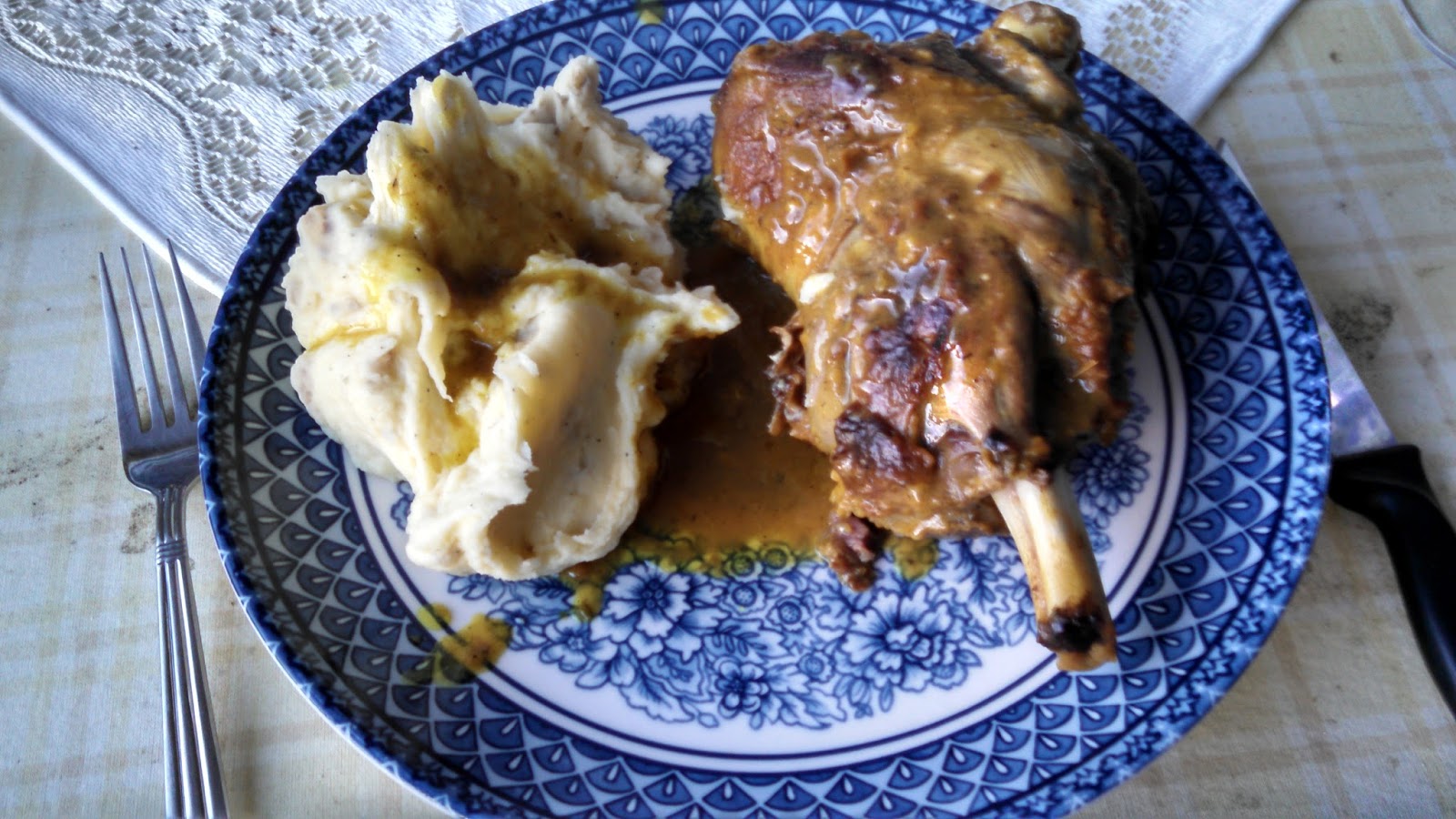
MUSLO CORNERO A LA CARIBE
(Lamb Shanks Caribbean Style)
4 lamb shanks (about 3 1/2 pounds)
Juice of 1 whole lemon
Salt and ground black pepper to taste
1/2 cup olive oil
1 8-ounce can tomato sauce
1 medium onion, peeled and finely chopped
2 cloves garlic, peeled and crushed
2 tablespoons fresh chopped oregano, or 1 teaspoon dried
1 teaspoon chopped fresh cilantro
2 bay leaves
1, Rinse lamb shanks and pat dry with paper towels.
2. Sprinkle with lemon juice. Season with salt and pepper
3. Heat olive oil in a heavy kettle or Dutch oven. Add lamb shanks and brown evenly over moderate-low heat.
4. Add tomatoes sauce, onion, garlic, oregano, cilantro, and bay leaves.
5. Cover and simmer on low heat until tender (1 hour). Remove bay leaves and serve.
Yield: 4 servings.
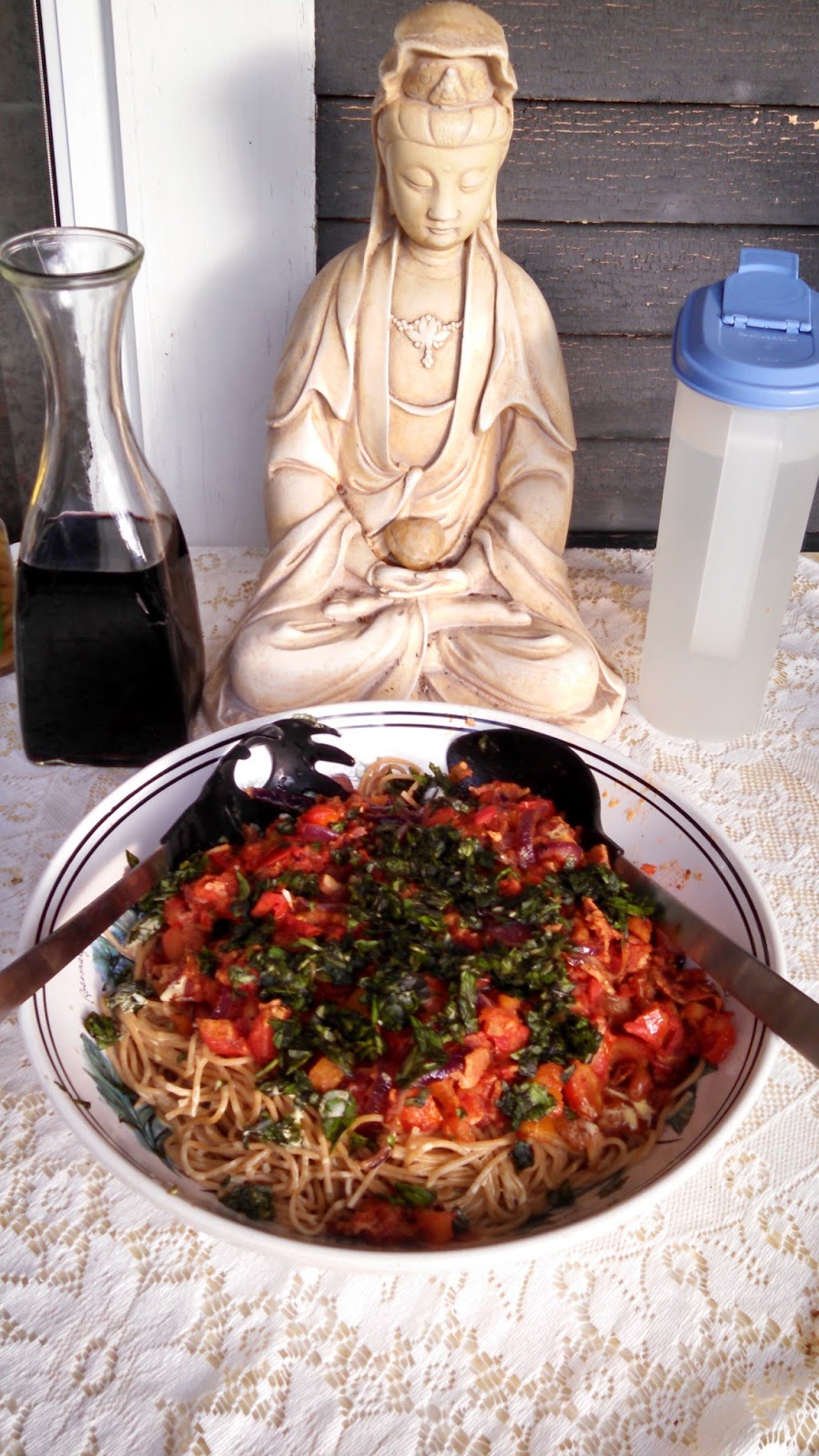
Pancetta is a pork product very popular in Italy. In some circles it’s called Italian bacon. Along with prosciutto, it’s very common in the Italian kitchen. It is made from pork meat that is salt cured and spiced with lots of black pepper. In a the supermarket or deli it comes in a tight roll (arrotolata), or already cubed. It can even be found sliced paper thin.
If you can’t find pancetta, bacon can be substituted—but it won’t taste the same. Also, with bacon, it’s best to blanch it first in boiling water since it reduces its smoky flavor (pancetta is not a smoked product). That being said, the recipe given below can be done with almost any pasta but it’s usually served with spaghetti or linguini. Once in a while, if I’m feeling adventurous, I’ll use perciatelli, my favorite string pasta. Why? It’s thick, like a phone cable—and I love what my Uncle Phillip in pre-PC days would call a “manly pasta.”
One additional thing I must say, since we’re talking about pasta: remember in the old days when it came in one pound boxes? More and more it’s now 12 ounces. When did this crap start? Ronzoni, bless their heart, still comes in one pound boxes. Barilla does not (it’s 13.25 ounces). Everyone else, these days, is 12 ounces. Pretty soon it’ll be 9 ounces, then 8 . . . you get the idea. Someday a family of four will have to buy two boxes of spaghetti or whatever to get fed. If you’re lucky enough to find a place that sells fresh pasta, you can still get it by the pound—and even if it’s more expensive, it’s a better deal. The corporate structure (no surprise!) is out to gyp us.
I pound tomatoes (preferably plum tomatoes)
10-8 ounces pancetta or lean bacon, sliced
3 tablespoons olive oil
1 medium onion, thinly sliced
1 clove garlic, peeled and finely minced
1 pound fresh or dried spaghetti or linguini (if you can find a 1-pound box)
5 fresh marjoram sprigs, minced, or 1/4 teaspoon dried
Salt and ground black pepper to taste
1/4 cup fresh shredded basil
Freshly grated Pecorino or Romano cheese
1. Wash tomatoes under cold running water and pat dry with paper towels. Chop coarsely.
2. Heat olive oil in a medium saucepan. Add pancetta and stir-fry over low heat until fat is rendered.
3. Stir in onion and cook gently for 8 minutes. Add garlic and cook 2-3 minutes more.
4. Add tomatoes. Season with salt and pepper. Cook, uncovered for about 10 minutes, stirring well. Meanwhile, cook pasta according to package instructions.
5. Stir the marjoram into the sauce. Remove from heat. Drain the pasta into a serving bowl. Pour the sauce over the pasta and toss well. Sprinkle with shredded basil, and serve, passing around the Pecorino or Romano cheese.
Yield: 4 servings.
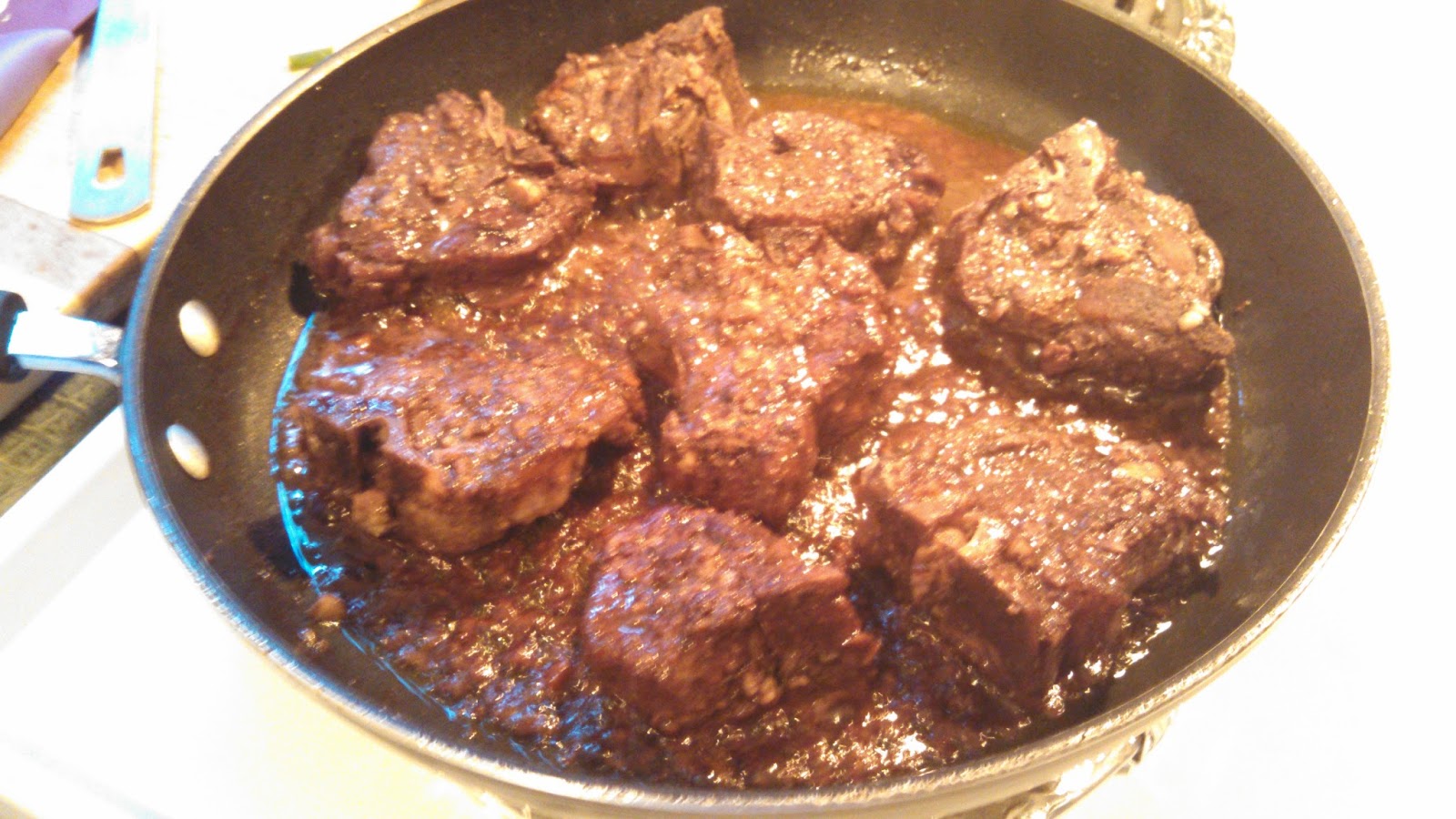
Lamb has long been a staple in our clan. We usually cook it the Nuyorican way: spices such as garlic, peeper, oregano and garlic are crushed in a mortar then patted on the lamb chops along with some olive oil and red wine vinegar. Yet we are always on the lookout for news ways to prepare this favorite. Thus I came across this Greek-Style recipe. It’s similar to Pureto Riucan cooking in terms of the spices used, except that my Greek acquaintances insist that in terms of oregano, only Greek oregano is mandated. Okay. When in Rome . . .
The beauty of this recipe is that it can be done on top of the stove, or using the broiler, or on an outdoor grilled. Be aware that, if grilling, omit the wine part. Or, you can use the wine in the marinade prior to grilling. Whichever way you choose to prepare, the recipe is a home run, or touchdown (insert whatever sports metaphor you desire).
3 to 4 pounds lamb chops (loin or rib), about 1-inch thick
3 tablespoons dried oregano, preferably Greek
6 cloves garlic, peeled and finely chopped
Salt and black ground pepper to taste
3 tablespoons olive oil
4 tablespoons butter
1/4 cup red wine vinegar
1. Wash chops under cold running water and pat dry with paper towels.
2. With a knife or fork, prick chops on both sides.
3. Combine oregano, garlic, salt and pepper in a small bowl. Rub spices on each side of lamb chops and drizzle with olive oil. Place in a covered bowl or zip-lock bag and marinate for at least 2 hours in the fridge or preferably overnight.
4. Melt butter in a large skillet or fry pan over medium heat. Add chops and cook for 4-5 minutes on each side, turning once or twice. Add wine, cover, and cook an additional 5 minutes. The wine will boil and thickened around the lamb, and that is what you want to increase the flavor. Add more wine , if necessary. Place on serving platter and let stand 2-3 minutes before serving.
Yield: 4 servings or more.

I didn’t discover this concept of ragout (pronounced “ragoo”) until my early manhood. I went to a restaurant on the west side of Manhattan and asked what is this “rag-out” thing. My friends corrected me as to the pronunciation, and we ordered the thing. Subsequently, I learned that “ragout” comes from the French verb ragoûter, which roughly translates “to stimulate the appetite.” It’s mainly a seasoned, thick stew of meat, poultry or fish which may or may not contain vegetables. To confuse you more, ragu, also derived from ragout, is a popular dish in Italy’s Bologna region and is served with pasta. It’s main ingredients are ground beef and tomatoes, with some onions, carrots and wine wine thrown in.
The dish given below is a traditional ragout made with fish fillets and mushrooms. In the recipe I use perch fillets. But you can substitute cod, haddock, turbot, or any light firm-fleshed fillets. For the mushrooms, I use the oyster variety; but you can use cremini, shiitake, chanterelle, or a mix of mushrooms. Now, some people may add cream to their ragout. I’m told by a diehard, utterly traditional chef that never may you add cream to the ragout. It is “sacrilege, sacré bleu!” I’m not fascistic in my cooking, so, if you want to add cream, or anything else you think will improve the flavor, go right ahead. The subject of good cuisine is to constantly experiment. That’s the real joy of cooking. Also, and this will drive the traditionalists nuts, this is my Latino version of the dish. Muchas gracias.
FISH FILLETS WITH MUSHROOM RAGOUT
5 tablespoons olive oil
1 pound oyster mushrooms, washed and chopped
2 cloves garlic, peeled and finely minced
1 small shallot, sliced thinly
2 tablespoons butter
1 cup chicken stock
1 teaspoon red wine vinegar
1 tablespoon chopped dill
4 6-ounce fish fillets
Salt and black ground pepper to taste
1 tablespoon fresh oregano, or 1 teaspoon dried
1/2 cup hot water
1. Preheat oven to 400 degrees F. Heat 3 tablespoons olive oil over medium heat in a large skillet or fry pan (I prefer cast-iron). Add mushrooms and sauté until tender, about 4-5 minutes.
2. Add garlic, shallot, and 1 tablespoon butter. Cook until garlic and shallot are softened, about 1 minute.
3. Add chicken stock, bring to boil, reduce heat and simmer until reduced by half and slightly viscous, about 4-5 minutes. Stir in vinegar and cook another 30 seconds. Remove from heat and stir in dill. Cover, and keep warm.
4. Wash fillets under cold running water and pat dry with paper towels. Drizzle with 2 tablespoons olive oil. Season with salt, pepper, and oregano, patting seasonings into the fish.
Place fish in a roasting pan. Add water and 1 tablespoon butter. Bake until fish is tender, about 10 minutes.
5. Place fillets in a serving dish, spoon mushroom ragout over fish, and serve.
Yield: 4 servings.
NEW BOOK ! THE CENTURION by Oswald Rivera.
It’s available in Paperback at Amazon.com
Also: Available in Kindle Edition at Amazon.com

“It is the first century of the Common Era. Imperial Rome is at the height of its power, with an empire stretching from the moors of Scotland to the sands of Arabia.
It is at this time that in Judea, a remote backwater of the empire. Marcus Valerianus of the tenth legion, is sent on a scouting mission seeking Jewish rebels. Instead, he encounters a young boy from nearby Nazareth, wandering in the desert.
The boy talks of a “Father” who rules over all, and how he is doing his “Father’s work.” Thus begins the Tale of The Centurion, and the startling secret that will change his life forever . . . . . . . ”
– – – –
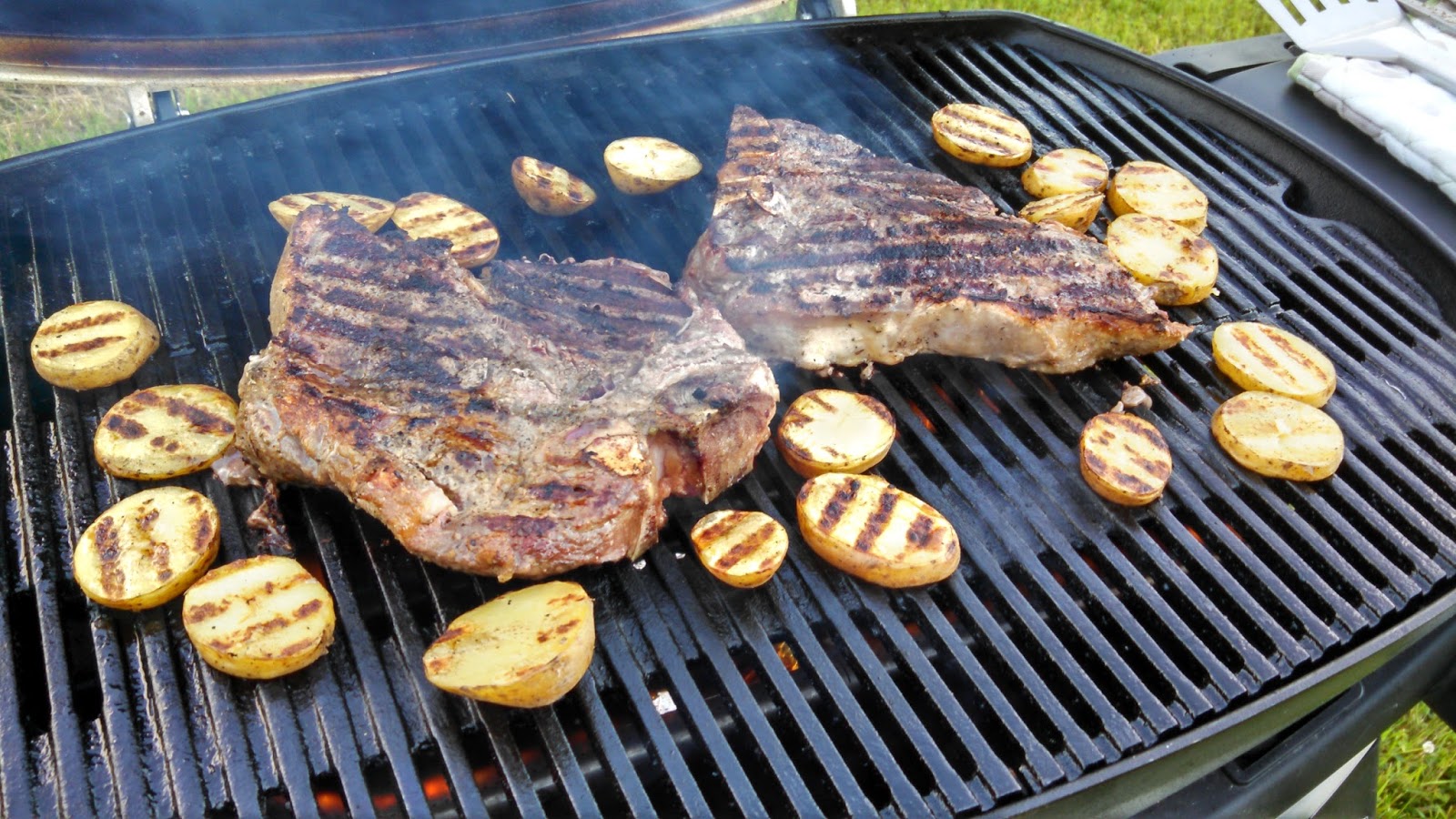
Grilling steaks can be the easiest or the most difficult thing depending upon how you go at it. The result can be a charred-burnt out piece of leather, or a raw, bleeding mess. The trick is to watch it carefully as it grills. The recipe given below is the Boricua way of grilling meat. That is, it uses all the herbs associated with Caribbean cuisine. Of course, you can add other spices as you desire. It’s all in the taste buds.
The recipe can be termed a peppercorn steak, or as they say in fancy-dan argot, “au poivre.” This consists of steak, normally filet mignon, cooked with cracked pepper, usually green peppercorns. In our cooking its black whole peppercorns.
Here we go again: in traditional Puerto Rican cuisine, we crush the spices in a mortar and pestle, to give it that extra zing. In you don’t own or have a mortar, then substitute ground pepper and salt to taste along with 1 tablespoon oregano, add 1 teaspoon garlic powder—and you’re set to go.
In terms of what meat to use, if you can afford filet mignon, go right ahead, and more power to you. Those of us who are less well-heeled can use other variety meats like strip steaks, cut about 1 1/2-inch thick. I use porterhouse steaks—believe it or not, I got them on sale.
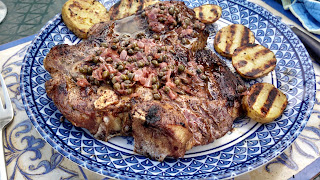
CARIBBEAN GRILLED STEAK
4 porterhouse steaks, 1 1/4 to 1 1/2 pounds
3/4 cup whole peppercorns
2 cloves garlic
1 tablespoon fresh oregano or 1 teaspoon dried
Salt to taste
1/2 cup olive oil
1 teasppoon red wine vinegar
1/4 cup butter
1/2 cup chopped scallions
2 cups beef broth
1 (3 1/2-ounce) jar capers, rinsed
1. In a mortar, crush peppercorns, garlic, oregano, and salt. Mix in olive oil and vinegar. Brush steaks on both sides with this mixture.
2. Place steaks on grill, cover with lid, and cook on each side 4-5 minutes or until desired doneness.
3. Melt butter in a skillet or fry pan. Add scallions and sauté about 1 minute. Add broth and capers, and cook until liquid is reduced by half, about 10-15 minutes. Serve over grilled steaks.
Yield: 4 servings.
© 2026 Oswald Rivera
Theme by Anders Noren — Up ↑