Oswald Rivera

Author, Warrior, and Teacher

Category: all (page 73 of 78)

Carrucho

For the Chinese it is an affinity for abalone. For the Italians it’s scungili. We Puerto Ricans call it carrucho. What we are talking about is the flesh found in conch shells. This dish exemplifies the different mindset of different cultures. To most North Americans the conch shell is used solely for ornamentation. To Latinos—as well as people of the Mediterranean and Asia—this mollusk is used for food and ornamentation.

Conch meat cam be found in any Hispanic or Oriental fish market. Most fishmongers order it on request. You can purchase it already cleaned or you can save pennies and do it yourself. The excess film that covers the skin has to be removed. This can be done best under cold running water.

In the Caribbean, caruccho sandwiches are very popular. You can take the dish given below and place it between two slices of bread, or on a roll, on even on a bagel. Or you can serve it with white steamed rice or small red potatoes. It should be noted that the recipe given is from my first cookbook, Puerto Rican Cuisine in America (Avalon Books – Thunders Mouth Press)

CARRUCHO (Conch Meat)

3 pounds conch meat, cleaned
1/4 cup water
Juice of 1 lemon
2 tablespoons salt
8 whole black peppercorns
3 cloves garlic, peeled
1/2 teaspoon dried oregano
3 tablespoons white vinegar
1/2 cup olive oil
2 medium onions, peeled and thinly sliced
2 medium ripe tomatoes, cut into wedges
1/4 cup pimento stuffed Spanish olives
1/8 teaspoon sage

1. Place cleaned conch in a bowl. Add 1/4 cup water and lemon juice and let stand for 10 minutes.
2. Remove conch meat to a heavy pot or kettle with water to cover. Add salt and bring to a boil. Lower heat and simmered, covered, for 1 hour.
3. Drain and, when cool enough to handle, cut into small bite-sized pieces. Place in a serving bowl or casserole dish.
4. Crush peppercorns, garlic and oregano in a mortar. Mix with vinegar and olive oil. Add to conch meat.
5. Add onions, tomatoes and olives. Sprinkle with sage and toss well.
6. Cover and let stand for 30 minutes; and serve.
     Yield: 4 servings

Enhanced by Zemanta

Buran – Eggplant/Lamb Recipe from the 13th century Arab World

In these perilous times, in this part of the world, what we hear about Islam and Muslims in general is rather negative. And yes, it’s understandable, given the wars we are in. But does anyone realize that, at one time, the tables were turned and while Europe was in the throes of its dark ages, the Islamic world was at the height in terms of science, culture, and government? Not only that, while Medieval western man was dining on rancid meat, in the Arab world, they were dining on savories cooked with spices from China and India and exotic fruit from Central Asia. In the West they subsisted on salted pork, roots plants and fermented ale, if they were lucky. In the Arab world they were using rosewater in their cooking and enjoying truffles from the Arabian Desert.

One of the earliest cookbooks comes from this period. It dates from the 13th century, and its author is a famed gourmet of the time, al-Baghdadi (his whole name is Muhammad ibn al-Hassan Ibn Muhahad ibn al-Karim al-Katib al-Baghdadi). His recipes reflect the times: they are full of spices from the East and are replete with frying, mincing, boiling, staining and stewing, usually all in one pot. Al-Baghdadi’s masterworks are lamb recipes. He cooks lamb with rice, with chickpeas, even with noodles. But the recipe given, Buran (my favorite) is simply lamb kabobs  served with friend and mashed eggplant.

So, tonight, imagine you’re in the court of the Caliphs, you’re the prince or princess of Persia and you’re dining on Buran, a gastronomic Arab delight.

BURAN

1 medium eggplant, about 1 1/2 pounds, peeled and cut lengthwise into 1/2-inch slices
1 pound ground lamb
1/4 cup sesame oil
1/2 cup vegetable oil
Salt to taste
1/4 teaspoon ground coriander
1 cup plain yogurt
2 cloves garlic, peeled and finely minced
1/2 teaspoon ground cumin
1 teaspoon ground cinnamon

1. Cook the eggplant in boiling salted water for 5 to 6 minutes. Drain and let stand at least 1 hour.
2. Meanwhile, use wet and oily hands to shape the lamb into small meatballs (about 20 to 30 kabobs). Heat the sesame oil in a large skillet and fry the meatballs over medium-high heat until well browned (about 10 minutes). Cover with water, bring heat to low and simmer until most of the water has evaporated and only some of the oil is left. Set aside and reserve.
3. Heat the vegetable oil in a large skillet (or use the same skillet from before), and fry the eggplant over medium heat until golden on both sides. The frying may be done in several batches with more oil being added as needed. Place the eggplant in a bowl and mash with a ladle or large spoon. Add salt, coriander, yogurt, garlic, and mix well.
4. Transfer the eggplant to a serving dish, arrange the meatballs on top, sprinkle with cumin and cinnamon, and serve.
    Yield: 4 servings.

Eggplant Parmesan/Provencal

Back in Spanish Harlem, in our family’s repertoire, one of the standby dishes was Eggplant Parmesan. Although we didn’t call it that. We are vociferous eggplant eaters, and the dish was just another version which we knew as eggplant Italian style because we added grated cheese. To us, back then,  any dish that had Parmesan cheese in it was considered Italian; just like any dish that had soy sauce was considered Chinese. It was the innocence of the meat and potato days of yore.

What made our version delectable is that it contained crispy friend eggplant, which we loved. Add a little tomato sauce, grated Parmesan, some good crusty bread and you has a great meal. Later in life, I discovered the French Eggplant Provencal, which was the same damn thing minus the cheese. You just add some capers to it and baked the eggplant instead of frying. Also, to the French, Eggplant Provencal is normally served as an appetizer. Whichever method you use, if you’re an eggplant lover, you’ll savor the meal. And, even if you don’t like eggplant, you just might change your mind.

EGGPLANT PARMESAN

1 medium-sized eggplant (about 1-1/2 pounds), peeled and cut into 1/2-inch slices
1/2 cup flour
1 teaspoon salt
1/8 teaspoon ground black pepper
1 teaspoon oregano
1/2 cup olive oil or vegetable oil (or more for frying)
3 tablespoons grated Parmesan cheese
1/2 cup canned tomato sauce, heated

1. Blend flour, salt, pepper  and oregano on a plate or piece of wax paper and coat each eggplant slice well with mixture.
2. Heat half of the olive oil in a heavy skillet, and fry as many slices of eggplant as can be accommodated without crowding until crisp and brown on both sides. Transfer slices to a shallow heat-proof platter or pie plate, and keep warm.
3. Add remaining oil to skillet and brown rest of eggplant slices. Sprinkle half of browned eggplant in platter with a tablespoon grated Parmesan cheese. Add remaining slices and second tablespoon of cheese.
4. Pour hot sauce over and around eggplant. Sprinkle with remaining cheese, place under a hot broiler from 3 to 4 minutes, and broil briefly until cheese melts and is slightly brown.

EGGPLANT PROVENCAL

1 medium-sized eggplant (about 1-1/2 pounds), peeled and cut into 1/2-inch slices
1 cup olive oil
1 clove garlic, peeled
1/2 cup canned tomato sauce
1 teaspoon salt
1/8 teaspoon ground  black pepper
1 teaspoon oregano
1/2 cup capers

1. Preheat oven to 450 degrees F.
2. Dip eggplant slices in olive oil, and arrange on a flat baking pan or dish (I prefer cast-iron). Bake 10-15 minutes or until tender.
 3. Crush garlic and brown lightly in a little olive oil in a small saucepan. Add tomato sauce and cook until hot. Remove from heat and season with salt, pepper and oregano.
4. Pour sauce over eggplant, sprinkle with capers and serve hot or cold.

For both recipes the yield is about 4 servings.

Enhanced by Zemanta

Shallow Fried Fish

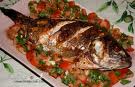
The Chinese Lunar New Year is upon us. The year of the Golden Rabbit. Chinese New Year has always featured traditional foods which are served to commemorate the event. In the south of China it’s stir-fried lettuce and Cantonese shrimp; in southern Taiwan it’s crab rolls; in northern China it’s fried dumplings. Always every meal includes a fish dish. One of my favorite fish meals for this time of year, or any time for that matter, is shallow fried fish. It’s very easy to make and includes a technique called “shallow frying.” This type of cooking has been popular in China, I’m told,  for many years. So, tonight, give tradition its due, and pay homage to friends and ancestors, with an entree that’s bound to please everyone.

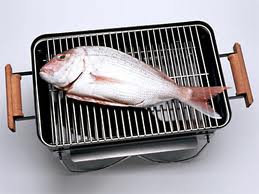
Be aware that this recipe calls for a whole fish. That’s right: whole—with head intact. Almost any variety of fish can used: blue fish, tilapia, mackerel, flounder, mullet, tilefish, red snapper, stripe bass, etc. Just make sure the fish is scaled, gutted and clean (but with  head kept on). For this kind of cooking, a wok is perfect; but any large skillet or pan can also be used. Note that this fish goes well with steamed rice or noodles.

SHALLOW FRIED FISH

1 whole fish, 1 1/2 to 2 pounds
1 teaspoon salt per pound of fish

2 tablespoon peanut oil (or olive oil)
1 teaspoon sugar

1 piece of ginger, approximately about an inch, peeled and minced
2 tablespoons soy sauce (preferably light soy sauce)
2 tablespoons dry white wine, or dry sherry
2 tablespoons water
2 stalks scallions, finely chopped

1. Rinse the fish under cold running water and dry with paper towels. Rub it well inside and out with salt.
2. Heat the wok at a high temperature. Add the oil and tilt the wok until all the bottom is covered with oil. Lower heat to medium-low.
3. Add the fish, and tilt the wok at different angles to let the fish catch the heat evenly. BE PATIENT and cook for about 10 minutes. Additional drops of oil may be added, if needed, to prevent the fish from burning and sticking to the bottom of the wok. Turn the fish and cook the other side for about 10 minutes. When the fish is well browned (that means its done), carefully take out the fish, and clean the wok with paper towels.
4. Heat wok again, add sugar, ginger, soy sauce, wine, water, and scallions. Add fish and tilt the wok to let this mixture surround the fish. Cook on medium heat for 1 minute. Turn the fish and cook the other side for 1 minute. Remove from wok and serve, spooning the sauce over the fish.
    Yield: 4 servings. 

Enhanced by Zemanta

Stuffed Plantain Balls

I love plantains, especially green plantain, the type that we prepare in fritters called tostones. But you also have ripe plantains; essentially green plantains that have ripened to a deep, dark yellowish color. Some people prefer the ripe plantain since they give a sweeter flavor. In my family we prefer tostones. Although once in a while we cook ripe plantains with eggs for breakfast; or in a traditional dish called pinon (pronounced peen-yon) , a layered casserole of ripe plantains, beef and kidney beans.

Another of our favorite uses of ripe plantains is cheese-stuffed plantain balls. Think of it as fallafel balls but with cheese inside and a luscious, sweet exterior. Believe me, once you’ve had these plantain balls, you’ll be hooked. They can be served as an appetizer or as a main entree accompanied by rice—a perfect vegan dish.

CHEESE-STUFFED PLANTAIN BALLS

6 ripe plantains, unpeeled and cut in half widthwise
8 cups water
Salt to taste
1/4 cup butter
2 tablespoons cornstarch plus cornstarch for shaping balls
1/2 pound cheddar cheese, shredded
Oil for deep frying (vegetable oil, corn oil, canola oil, olive oil, etc.)

1. Drop the plantain halves into boiling salted water and cover. Cook rapidly for 20 minutes. Drain. Peel the plantains and mush the pulp. Add the butter and 2 tablespoons cornstarch and mix well. Let cool enough to handle.
2. To shape the balls, coat the palms of the hands with cornstarch. Pick up about 1 tablespoon of the pulp (or 1 teaspoon, depending on the size desired) and flatten slightly between the palms. Add a portion of the cheese and mold the plantain around it, shaping the whole into a ball. Repeat until all the balls are formed. Be aware that you can make the balls as large or as small as you desire. In the Rivera family we like big plantain balls. Other folk may prefer smaller variations similar to Swedish-type meatballs.
3. Heat the oil for deep frying. Drop the balls into the oil and cook until golden. Remove and drain on paper towels.
    Yield: 8 to 12 balls, depending on size.

Enhanced by Zemanta

Caldo Gallego

 
Great. Back to recipes. Today it’s Caldo Gallego  For those of you who’ve been to Spain recently, this will probably be familiar. For those who haven’t been to Spain, then you’re in for a treat.

Caldo Gallego (Cal-doh Gah-jeh-goh) is a dish that is very popular in Puerto Rico. Even in Ponce, in the southern part of the island, where my parents hail from, the measure of a good restaurant is not its arroz con pollo or mofongo, it’s the quality of  its Caldo Gallego. This is a vigorous soup that was brought over from Galicia, a historic region in northwest Spain. I’m told that in Galicia the base for this rich broth is an aged bacon called unto (oon-toh). Since you may not find it here, lean cured ham and/or salt pork can be used instead. Also, in Spain the soup is cooked in a large earthenware pot and is served in earthenware bowls. For those who don’t have  earthenware, any heavy pot or kettle can be used, like a caldera  (a heavy pot made from cast-iron or cast aluminum and found in any Caribbean store). And, yes, regular soup plates will do. Add a loaf of good bread, and you have the perfect repast. Simple, delicious, and filling.

Let me add that the recipe is from my first cookbook, Puerto Rican Cuisine in  America (Thunder’s Mouth Press). The soup needs long, gentle cooking time ( about 3 hours). But it’s worth the wait.

CALDO GALLEGO (Galician Style Broth)

1/2 pound dry white beans
3 ounces lean cured ham or salt pork, washed and diced
1/2 pound smoked ham, washed and cut into bite-sized pieces
1 small onion, peeled and sliced in rounds
1 pound potatoes, peeled and quartered
3 turnips, rinsed and quartered
1 10-ounce package frozen turnip greens
Salt and ground black pepper to taste

1. Rinse beans under cold running water and drain.
2. Place beans in a large kettle or Dutch oven. Add water to cover, cured ham, smoked ham and onion. Bring to a boil, cover and simmer on low heat for 2 hours.
3. Add remaining ingredients and gently stir to mix. Bring to a second boil, cover and simmer on low heat for 1 more hour. If needed, you can add more water during last hour of cooking. It depends on how “soupy” you want it.
    Yield: 6 to 8 servings.

Enhanced by Zemanta

Making Pasteles for those special occasions

As previously promised on this Blog .. MORE Videos !

This time, it is the Art of Making Pasteles.
These Pictures will take you to the YouTube Videos

Cooking with Oswald Rivera: Pasteles Part 1

Cooking with Oswald Rivera: Pasteles Part 2

Please enjoy the Videos .. More to come at a later time.

Special Thanks to Holly and the Hard Drive Doctor.

Rice Pudding


For the holidays we Puerto Ricans have our own versions of desserts. The most popular is arroz con dulce. Simply, rice pudding. The literal translation of arroz con dulce is “sweetened rice.” A more appropriate term would be sweet coconut rice. Coconut milk is the main component of the dish. In my first cookbook, Puerto Rican Cuisine in America, I give the recipe using a fresh ripe coconut. If you want to be traditional and use a genuine coconut, you are welcomed to get the book and try the recipe. For those who don’t have the time to crack open and prepare a coconut, I give below a quicker recipe using canned coconut milk or cream. In either case, the recipe is marvelous and delicious. Believe me, this is not your ordinary rice pudding recipe. As a dessert, it sets the bar pretty high.

ARROZ CON DULCE (Rice Pudding)

2 cups either long grain or short grain rice
2 cups canned coconut milk or cream
1 5-ounce can evaporated milk
1 teaspoon ground cinnamon
1 teaspoon ground cloves
1 teaspoon salt
1/4 teaspoon vanilla extract
1/2 cup seedless black raisins
1 1/2 cups brown sugar
1 teaspoon butter or margarine
1/2 cup cracker crumbs

1. Wash rice at least three times in cold water and drain to rid it of starch. What in Pennsylvania Dutch country is known as “washing in several waters.”
2. In a heavy kettle or pot, heat one cup water. When it comes to a roiling boil, add rice, coconut milk, evaporated milk, cinnamon, cloves, salt, vanilla, raisins, sugar and butter. Cook on moderate heat, stirring frequently with a wooden spoon, for 35 minutes or until rice is tender and most of the liquid has been absorbed.
3. Spoon into a round serving platter or large pie plate.
4. Sprinkle with cracker crumbs and allow to cool at room temperature before serving.
Yield: 10 0r more servings.

Enhanced by Zemanta

Latkes – Reprise


Last year about this time I put up my recipe for Puerto Rican latkes. We discovered latkes from our Jewish friends when they celebrated Chanukah (also known as Hanukkah). We Latinos love every manner of fritters and, to us, that’s what latkes were. In our family we soon started making our own, Caribbean version. We make then every year and we grew to love them. While experimenting with them, we also discovered that if you add some grated carrots to the recipe, it enhances the flavor.

So, here again are potato latkes, Puerto Rican style.

POTATO LATKES (RIVERA FAMILY STYLE)

3 large potatoes
1 small onion, chopped fine
3 eggs
1/4 cup grated carrots
2 tablespoons matzo meal
1 teaspoon salt
1/4 teaspoon pepper
1/4 teaspoon oregano
2 tablespoons parsley, chopped
Oil for frying (I use a combination of vegetable oil and olive oil, 1/2 cup or more)

1. peel the potatoes and grate them into a bowl. You can do it by hand (the traditional method) or by using a food processor. Squeeze out the extra liquid into the sink.
2. Add onion, eggs, carrots, matzo meal, salt, pepper, oregano and parsley. Mix well.
3. In a large heavy skillet (I prefer cast-iron), heat the oil. Using a tablespoon, carefully drop the potato mixture into the hot oil and fry until browned on both sides, turning only once (about 3 minutes per side). Some prefer to flatten each latkes with a spoon. Use whatever method you desire. The latkes should not only be golden but crispy.
4. Drain on paper towel and serve with applesauce, sour cream or preserves.
Yield: about 2 dozen or more latkes.

Enhanced by Zemanta

Sofrito


Sofrito. I love the word: “Soh-free-toh.” Without it, Puerto Rican cuisine would be scant indeed. It is an aromatic mix of herbs and spices that is a base for cooking countless dishes. This concept can be found in other cultures as well. Think of garam masala, the Indian mix that is also used a a base flavoring. Or kimchi in Korean cusine. We use sofrito when cooking chicken, fish, pork, beef, you name it—almost everything except desserts.

Sofrito can be whipped up in a few minutes in a blender or food processor. The word itself is a generic term that has no correct English translation. “Frito” is Spanish means fried. Sofrito could be taken to mean stir-fried, although this would not be entirely accurate. Sofrito can be stored in a closed, tight jar or container in the refrigerator for 3 to 4 days or, in the freezer compartment, indefinitely. It’s the kind of product where the basic recipe can be doubled or tripled, depending on how much you may want to use. Given below is a quick recipe.

Sofrito

8 leafy stems of cilantro (available almost anywhere these days)
1 medium green bell pepper (pimento)
1 clove garlic, crushed
1 medium onion, coarsely chopped
1/4 pound aji dulce (small, sweet chili peppers found in most bodegas or Asian stores and sold
loose by the handful or in packets of 1/2 to 1/4 pound. A 1/4 pound packet contains about 28
peppers) They should be sliced in half with inner seeds removed.
6 whole leaves recao, chopped (recao is a small, green stemmed herb also found in Caribbean
and Asian markets). If you don’t have recao, you can substitute curly parsley. In the Cuban
version of sofrito they disregard recao altogether. Let you tastebuds be the judge.

Combine all the ingredients in a blender and puree until it has a smooth, sauce-like consistency, adding 1 tablespoon of olive oil or vegetable oil while pureeing. This will yield about 1 1/3 cups.
In terms of storing sofrito, a great idea is to freeze it in ice trays. A regular size ice cube is equal to approximately 2 tablespoons of sofrito. You simply plop a cube into the skillet or stew pot, and it’s much easier than scooping out tablespoons of the stuff from a can in the freezer.

Okay, how do you use it? Simple. You can just add it as is to a stew or soup to enhance its flavor; or to a pot of beans, or almost any other dish to give that added kick. If you want to make flavorful, colorful rice, saute 1 or 2 tablespoons sofrito in 1 tablespoon olive oil or corn oil for about a minute or so to blend the diverse flavors. Add 1 tablespoon of tomato sauce or tomato paste and cook a minute or 2 longer. Add rice, water, and cook as you normally would. It makes plain white rice LUXURIOUS.

A final note. There are now on supermarket shelves many erzats sofrito products. Skip ’em. All you’re getting are chemicals and assorted crap. Nothing beats homemade sofrito. Besides, it’s so easy to make.

Older posts Newer posts

© 2026 Oswald Rivera

Theme by Anders NorenUp ↑