Oswald Rivera

Author, Warrior, and Teacher

Category: all (page 74 of 78)

The Color of Rice


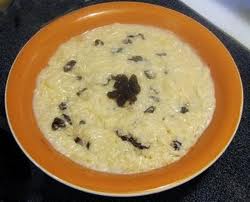
My friends marvel when I serve them rice pilaf or yellow rice dishes. Invariably they ask: what colors the rice? It’s a complex question, depending upon the dish. Fragrant colored rice has been in my culture since the beginning. It was the Spaniards who got the method from the Moors, when the Arabs introduced saffron as a flavoring and coloring agent in Southern Spain. Saffron is still the best thing around—but it’s expensive. If you can afford it, more power to you. All you do is add a few strands of the stuff to the rice while it’s boiling to get that great arroz amarillo (yellow rice) hue.

My parents came from the Greatest Generation (as it is called by some). So, during the Great Depression, they and their fellows developed equitable shortcuts to using safron (which they couldn’t get and, even if they could, they couldn’t afford it). Below are easy, ready to use alternatives that give rice whatever color you want; and also add to its flavor. I’ve used these alternatives, at one time or another, depending upon my financial condition, and it’s given me a marvelous rice dish every time.

Achiote – This is simply annatto seeds cooked in vegetable oil or olive oil. It’s our favorite product for coloring food. You can find it in most supermarkets in 8-ounce jars. Annatto is the pulp of the tropical tree Bixa orellana; and annato dye is used in coloring some cheeses. To prepare: just cook 1 tablespoon annatto seeds in 1/2 cup olive oil, on low heat, stirring frequently for 5 minutes. During cooking, the oil will turn a bright orange-red. The longer the seeds steep in oil, the deeper the hue. Remove from heat, let cool, and strain into a glass jar or container. You can keep it in the fridge indefinitely. Use as you wish, from 1 to 3 tablespoons when cooking rice, depending on the color you want to attain.

Tomato Sauce and Tomato Paste – This will do when you don’t have annatto seeds. But, depending on how much you use, it will render a more reddish color to the rice. Now, experts in my family contend that tomato sauce will give a better color, while tomato paste will give a better flavor. It’s all a matter of personal preference. To prepare: cook 1/3 or more cup tomato sauce, or 2-3 tablespoons tomato paste, in 3 tablespoons olive oil. If you want to enhance the flavor, you can add 1 small chopped onion and/or 1-2 cloves finely diced garlic. When you reached desired consistency, add a couple of cups of rice. Stir to mix, add water, bring to a boil, lower heat, cover, and cook the rice as you normally would.

Tumeric – This spice is known as Indian saffron, since it’s widely used as an alternative for the more expensive saffron. You get it in the supermarket in the form of a dry root powder. It not only adds a custard-like yellow color to rice but it also impart a distinct flavor. Tumeric is extremely strong, and it gets stronger as it cooks. A little goes a long way. Be judicious in its use. As noted, it’s a powerful yellow dye, so try not to stain your apron or clothes with it while cooking. To use: just add 1 teaspoon (or more, but be careful) to two cups of rice when it comes to a boil. Cover and simmer as you normally would.

Dry mustard – That’s right, dry yellow mustard in the powdered form. I know. You’re thinking about mustard on hot dogs, burgers, etc.; but mustard, in its own right, adds great flavor and color to foods. Like tumeric, it tends to be strong. Figure it this way, you can substitute 1 teaspoon of dry yellow mustard for 1 teaspoon tumeric. Just add to rice when it comes a boil, cover, and cook as instructed.

Parsley – For green rice. Yes, it’s hard being green. But in rice it’s okay. Adds another dimension and flavor to the dish. Simple: take 1 bunch of parsley (I prefer the curly Italian type parsley), wash and chop finely (by hand, or in a food processor). Saute it in 2-3 tablespoons olive oil with a couple of finely chopped garlic cloves thrown in. To enhance the flavor you can even add a chicken bouillon cube, and (if you want) 3 tablespoons light cream. Add rice, water, and cook as you normally wood. It will give you deliciously green-hued rice.

Black Rice (Arroz con Calamares) – This is rice cooked with squid or cuttlefish. The color comes from the dark color imparted to the grains as they cook with the squid in its ink. It’s a favorite in my crowd. The trick here is that the rice will come out darker if canned squid is used. 4-ounce cans of squid in their ink can be found in most supermarkets or Asian and Caribbean stores. To prepare: saute, in 2 tablespoons olive oil, 1 green bell pepper (cored seeded and chopped), 1 small onion (chopped), and 1 clove garlic (finely minced). Add 1/2 cup tomato sauce, and 1 chicken bouillon cube. Stir in 3 cans squid in this ink plus 6 pimento stuffed Spanish olives. Stir in 2 cups rice, water to cover by about 1/4-inch, season with salt and pepper, bring to a boil, and cook until liquid is absorbed (about 20-25 minutes).

There you have it, friends, different and varied ways to add delicious color to your rice dish. Experiment, see which one you like best—and enjoy!

Enhanced by Zemanta

Pumpkin Gratin


Halloween is upon us yet again. And the jack-o-lanterns are out. Anybody ever consider cooking those suckers? I would not recommend it. The traditional pumpkin used as a jack-o-lantern motif makes for a flavorless, insipid dish. That’s why they are used for decorations. In my culture, pumpkin are prized as bianda or cooked root plants that we use to enhance a meal. Traditionally, our favorite pumpkin dish is very simple: slice a piece of pumpkin, peel, remove seeds, and boil until tender. Then serve with olive oil and vinegar.

But I’ve experimented with pumpkin dishes and found that they make a great gratin. A gratin (pronounced grah-tan) comes from French cooking. It is a dish prepared with a brown crust. My pumpkin gratin is quick and easy to make, and it’s tasty to boot. Again, use small available commercial pumpkin, not the Halloween type or, better yet, you can use winter squash or butternut squash.

So, here goes Le gratin de Courge, as our French brethren would say. It makes a fabulous side dish or accompaniment to any meal.

PUMPKIN GRATIN

2 to 2 1/2 pound pumpkin, butternut, or other winter squash, halved, seeded, peeled, and cut
into 1/2-inch cubes
1/4 cup flour
1/3 cup olive oil
8 garlic cloves (yes, 8), finely chopped
3 tablespoons chopped fresh parsley
Salt and ground black pepper to taste
1/4 teaspoon chopped fresh oregano (or pinch dried)

1. Preheat oven to 325 degrees F.
2. Toss the pumpkin or squash cubes in the flour until they are evenly coated.
3. Generously oil the bottom and sides of an ovenproof casserole, Dutch oven, or cast-iron pan (you will have some oil left over). Fill the casserole with the pumpkin or squash. Then scatter the garlic and parsley over it, and season with salt, pepper, and oregano. Sprinkle the remaining oil over the pumpkin or squash.
4. Place in oven and bake for 2 to 2 1/2 hours or until the top has formed a rich dark crust. Note that it’s not necessary to add water during cooking since the pumpkin or squash produces enough liquid on its own.
Yield: 4 servings.

Enhanced by Zemanta

Chicken Noodle Soup (P.R. Style)


Chicken noodle soup. What is lovingly termed “Jewish penicillin.” We Puerto Ricans have our own version of it, and just as good. We use noodles, which are called fideos (fee-deh-os). These noodles are thin coiled strands similar to angel’s hair or vermicelli. People back on the island, in the old days, read the package name and took it to mean any kind of noodles. In time fideos became the most popular pasta in both the island and the mainland. It’s use is mainly in soups. When Puerto Ricans first migrated to New York back in the 1940s and 50s, and went shopping, they wouldn’t ask for noodles, they would ask for fideos. It was the only pasta pasta we knew, apart from spaghetti.

I would say our chicken noodle soup is as healthy and beneficial as its Jewish counterpart; and it has a particular Latin flavor. As noted, if you can’t find the fideos, any thin strand pasta will do as well. You can find this recipe (and others) in my cookbook, Puerto Rican Cuisine in America (Avalon Books).

SOPA DE POLLO CON FIDEOS (Chicken Noodle Soup)

1 broiler fryer (about 2-2 1/2 pounds, cut in parts)
2 quarts (8 cups) water
1/2 pound fideos #169 (see above)
2 medium Idaho or Maine potatoes, cut into 1-inch cubes
1 packet Sason Goya (coriander and annatto—found in any supermarket these days)
1 chicken bouillon cube
1/4 cup tomato sauce
Salt and ground black pepper to taste
2 tablespoons fresh chopped parsley

1. Rinse chicken under cold running water and pat dry.
2. Place chicken in a large kettle or Dutch oven and add water. Bring to a boil, lower heat and simmer, covered, for 1 hour or until chicken is very tender.
5. Remove chicken to a cutting board and let cool. Bone chicken, discarding bones and skin. Cut meat into bite-size pieces
4. Add chicken pieces, fideos, potatoes, Sason Goya, bouillon cube and tomato sauce to the broth. Add another cup of water, if needed, and season with salt and pepper.
6. Bring to a boil, cover and simmer on low heat for 15 minutes. garnish with parsley.
Yield: 4 to 6 servings.

Enhanced by Zemanta

Hummus


When I was a youngster growing up back on the block, we never heard of hummus. It wasn’t until my early adult-hood that I became aware of this Middle Eastern savory. Today its is ubiquitous. You see it everywhere. No party, wedding, birthday bash, or social function would be complete without it. It’s used as a spread, dip, or pita filling. Most people get it in the supermarket, with all the additives that come with it to preserve shelf-life. However, some of us would never buy the store bought stuff. Why? Because it is so EASY to make. Ten minutes, top, and you have grade A hummus.

Hummus is a concoction of chick peas (garbanzo beans), Tahini, or sesame seed paste. I use Tahini, which can be found in any store and is simply pureed roasted sesame seeds. Apart from using hummus as dip or over veggies, I like it over rice. Try it. It’ll spice up the old grain. But my favorite hummus recipe is with pasta and olives. Simple: cook any tubular pasta (penne, macaroni, rigatoni, ditalini, etc.) as per package directions. Drain, then add a cup of hummus, and one (6-oz) can medium or large black olives (drained under cold running water to remove excess salt, and sliced). Mix it all together, and you have a great, delish pasta dish. Quick and Nutritious.

Of course, you need to make the hummus first. So, here is my quick hummus recipe. You’ll never buy the shelf stuff ever again.

BASIC HUMMUS

1 (15-oz) can garbanzo beans (chick peas)

1/3 cup Tahini

1/4 cup lemon juice

3 cloves garlic, peeled and halved

ground black pepper to taste

1 teaspoon olive oil

1. Place all ingredients, except the olive oil, in a blender or food processor. Blend until smooth.

2. Transfer to a serving bowl or dish. Drizzle olive oil over the mixture and serve.

Yield: about 2 cups (the recipe can be doubled for additional servings)

NOTE: Some people like to add cumin (about 1 teaspoon) and a pinch of paprika to the recipe for a more pronounced Middle Eastern flavor. Do whatever suits you best.

Rossana Rossi’s Red Clam Sauce


One of my dear friends, Rossana Rossi, had sent me (at my request) a delicious clam sauce. It is truly scrumptious. Now, in her recipe, fresh clams are used. If you don’t want the bother or trouble of shucking fresh clams, I guess you can buy chopped or whole clams from a jar at the supermarket. But, I tell ya, it ain’t the same. The taste and texture of fresh clams is unequal in this dish.

As to the type of clams used? There is a variety. You got Chowder clams that are used for (you guessed it) clam chowder. There are Cherrystone clams, not as large as chowder clams. You could say they’re the second largest, and go great in a clam sauce. Then there Top Neck clams that are used mainly for clams casino and clams on the half shell. And, finally, Little Neck clams that can be used in a clam sauce as well as steamers. They are tiny and sweet.

Rossana says this is her personal recipe for clam sauce, and she invented it about a month ago while working on a “super tasty awesome tomato sauce.” It’s a “Dominican/Italian” recipe.

ROSANNA ROSSI’S RED CLAM SAUCE

2 dozen Cherrystone clams, or 4 pounds Little Neck clams, scrubbed clean and picked over
4 tablespoons olive oil
2 cloves garlic, minced
2 (28-ounce) can diced tomatoes
2 teaspoons oregano
1 teaspoon thyme
2 tablespoons vinegar (preferably herb-infused)
1 teaspoon rosemary
1 whole cinnamon stick

1. In a large frying pan or skillet, heat olive oil. Add garlic and saute quickly (do not let the garlic burn). Add tomatoes, oregano, thyme, vinegar, rosemary and cinnamon stick. Lower heat and simmer about an hour or so (Rossana says she cooks her sauce for 2 hours).
2. While the tomato sauce is cooking, place about 1-inch water in a large saucepan, add clams and steam them open. Place shell-less clams in a plate and set aside. Save the water left in the saucepan. If you desire, once clams have cooled you can chop them before adding to the sauce, or you can leave them as is.
3. When the sauce is just about done, add the clams and clam water. Simmer until the flavors are blended. The trick is not to overcook the clams; just reheat.
4. Serve over any long-type pasta such as linguini, spaghetti, perciatelli, or fettuccine.
Yield: 6 servings or more

Enhanced by Zemanta

Grillin’ Chicken

We’re not going to put away that grill anytime soon. The long hot summer continues. So does al fresco cooking. In that vein, let’s grill some more. This time, chicken. Believe it or not, chicken is one of the most easiest things to cook on a grill. Problem is, most times, it’s burnt chicken on the outside and, almost raw chicken on the inside. I discovered a long time ago, to get perfectly grill, cooked chicken, simply parboil the chicken pieces beforehand. Now, this may not be necessary if cooking chicken breasts, especially if they have been pounded into thin pieces. That being said, making chicken on a grill is a quick straightforward thing. It all depends on the herbs or sauce used in the cooking.

Below are three easy grilling recipes for poultry. Don’t have access to a grill? You can do same by broiling chicken in the oven.

#1: GRILLED POULTRY

For this recipe you can use small chickens, Cornish game hens, or even quail. Rinse poultry under cold running water, and pat dry with paper towels. Split the poultry in half. In a bowl, combine 1/2 cup olive oil, 2 tablespoons red wine vinegar, 1 teaspoon dried oregano, 3 minced garlic cloves, and 1/4 teaspoon dried sage. Add poultry and marinate for about 30 minutes or more. Remove from marinade and grill the poultry pieces directly over medium coals or gas grill. Cook for about 20 minutes, turning and basting frequently with the marinade mixture.

#2: SIMPLE GRILLED CHICKEN
4 chicken breasts
1/3 cup olive oil
6 tablespoons fresh lemon juice
1 teaspoon oregano
1 teaspoon thyme
1 teaspoon rosemary
2 garlic cloves, peeled and minced
1/2 teaspoon red pepper flakes (optional)

1. In a blender or food processor, combine all the ingredients except for the chicken breasts, and process until smooth.
2. Place chicken in a large bowl or, better still, in a resealable plastic bag ( I like the ones that have the zip lock). Pour marinade mixture over chicken and cover (if using bowl), or seal, if using bag. Place in the refrigerator and let marinate for 1-2 hours (you can even marinate overnight if you want a full, rich flavor).
3. Drain marinade and reserve. Grill chicken, turning and basting frequently with marinade for about 30-40 minutes or until desired tenderness.

#3 GINGER-HONEY GLAZE GRILL CHICKEN

1 2 1/2-to-3 pound chicken, quartered or cut into serving pieces
Olive oil, melted margarine or butter
1 teaspoon ground black pepper
2 teaspoons dried oregano
1/2 teaspoon finely shredded orange peel
1/2 cup orange juice
1/2 cup sliced scallions
2 tablespoons honey
1 tablespoon soy sauce
2 teaspoons corn starch
1 teaspoon grated ginger

1. Rinse chicken under cold running water and pat dry with paper towels. Place chicken in a pot with water to cover, bring to a boil, and parboil for about 2 minutes.
2. Remove chicken and brush with oil, melted margarine or butter. Sprinkle with pepper and oregano. Set aside
3. To make Ginger-Honey Glaze: combine remaining ingredients in a small skillet or frying pan. Cook and stir over medium heat until bubbly. Cook, stirring all the time, about 2 minutes more.
4. Place chicken, skin side down in an uncovered grill directly over medium coals or gas grill, and cook for 20 minutes. Turn and grill for 15-20 minutes more or until desired tenderness, basting often with the Ginger-Honey Glaze.

Enhanced by Zemanta

Grilled Steak with Peppercorns

One of the most popular and easiest dishes to make is steak au poivre vert. That is, steak cooked with green peppercorns. It’s a classic, and a favorite with firemen in firehouses because it is so easy to prepare, and still considered classically French. Well, the same deal can be done in the hot summer months on the old grill. And you don’t need green peppercorns. If you don’t have them, you can use regular black peppercorns which can be found in any grocery store. No need to be fancy with the meat, unless you want to. Almost any steak variety can be used, and not just the top quality stuff like rump, porterhouse or rib-eye. Usually, for this type of grilling the best is strip steak, boneless beef steak, beef tenderloin, top round or, if you want to spend a little more cash, sirloin. The steak should be anywhere between 1-inch to 1 1/2-inch thick.

With almost any food item, there are two ways to grill: direct heat and indirect heat. With direct grilling the meat is placed directly over the heat source. This is the basic and most preferred method. For indirect grilling, the heat source is off to the side of where the meat is cooked. For a gas grill this means turning on the burner on one side but cooking the meat on the other side of the grill. The same with a charcoal grill. Just have the heated coals on one side and cooked the meat on the other side. I am not partial to indirect grilling. I like the meat cooked and seared. Choose whatever way works best.

Grilled Peppercorn Steaks
4 steaks
3/4 cup whole black peppercorns
2 cloves garlic, peeled
1/2 teaspoon dried oregano
1/4 cup olive oil
1/4 cup butter
1/2 cup scallions, chopped (can use both green and white parts)
2 cups red wine
1/3 cup capers, drained

1. Put peppercorns, garlic, and oregano in a mortar. Pound until crushed. Add olive oil and mix thoroughly.
2. Coat both sides of steaks with peppercorn-olive oil mixture.
3. Grill steaks, covered with grill lid, about 5-6 minutes per side or until desired doneness.
4. Melt butter is a small skillet. Add scallions and saute 1-2 minutes. Add wine and capers, and cook until liquid is reduced by half (about 10-15 minutes). Pour over steaks and serve. Note that this part can be done in the kitchen ahead of time so you can have it ready by the grill.
Yield: 4 servings.

Enhanced by Zemanta

Thai Noodles

My friend, Paul Goldstein, has become a maven in terms of Thai cooking. He’s spent some time in Thailand, and its cuisine has really captured him. Which is great for me since I’m always in the market for some good recipes. And this is one of them. It’s simply rice noodles in a sauce with chicken and broccoli added to it.

Noodles are ubiquitous in Thai cuisine. Some say there are over 300 varieties. The most commonly used are rice noodles, which come in three varieties: sen yai (wide flat noodles), sen lek (thin flat noodles), and sen mee or sen mi, which are thin and round and are called vermicelli in the West. There are also chicken noodles (gu-tiaw gai), and pork or beef noodles (gu-tiaw rua); as well as barni, noodles made from eggs and wheat floor and usually sold fresh. If you can get these fresh noodles, you are in heaven. Another dry variety are mung bean flour noodles called wunsen. They are very thin and are known to us as cellophane noodles.

The recipe, called Chicken Lard Nah, uses wide precooked rice noodles. They do have thinner pre-sliced, precooked rice noodles, but Paul prefers cutting the wide noodles to the size he wants. The dish calls for osyter sauce, but Paul admits he didn’t get the sauce quite right so he experimented and came up with something else. In this case, sweet chili sauce, which Paul notes you can get at the local oriental grocery store for $1.89 or thereabouts. Chilies were introduced into Thailand by the Portuguese in the 16th century. And their cuisine has never been the same since. They love their chili.

The recipe is very easy and quick to make, quite tasty and healthy—except for the sweet chili sauce which has a high level of salt. But, as Pablo says, if you add it to the water in the pan, there’s no problem .

PABLO’S CHICKEN AND BROCCOLI WITH RICE NOODLES

3 tablespoons peanut oil, olive oil, or vegetable oil
3 tablespoons water
1 pound boneless, skinless chicken breast halves, cut into 1/2-inch wide strips
1 head fresh broccoli, cut into florets
6 separated strips (1 1/2-inch) precooked rice noodles
Sweet chili sauce to taste
1 medium to large ripe tomato, cut in half and then sliced into quarters

1. In a cast-iron pan or wok, add the oil and water, and mix.
2. Add chicken strips and broccoli florets. Cook for about two minutes. Cover the chicken and vegetable with the rice noodles.
3. Cook for about 5-8 minutes, stirring constantly, making sure there’s enough water to steam everything or else the noodles will stick. If necessary, add a little bit more water.
4. Add sweet chili sauce and mix well with the liquid remaining in the pan or wok.
5. Garnish with tomato.
Yield: 4 servings.

Enhanced by Zemanta

Rama Rong Song Chicken

Recently, my dear friend, Paul Goldstein, sent me an e-mail with regard to my posts on Chinese wok cooking. He, like I, is an avid fan of wok cuisine; and he also prefers using a cast-ironwok. Following this vein, he gave me a Thai recipe that can also be prepared in a wok. He stated it’s one of the easiest Thai recipes to make. I tried it, and he’s right. Quick and easy, and delicious.

Truthfully, I use a wok constantly for cooking these days, but I’ve never considered preparing a Thai recipe with it. But it does make sense. Both cuisines are Asian and full of flavor.

If you don’t own a wok, Paul’s recipe can also be done using a deep pan or pot. The recipe calls for using Satay peanut sauce, which you can get in any Asian store, or most supermarkets these days. So here it is: Pablo’s Rama Rong Chicken (with peanut sauce and spinach over rice).

RAMA RONG SONG CHICKEN

1 to 1 1/2 cups water
2 tablespoons peanut or olive oil
1 pound boneless chicken breasts, cut into 1-inch strips
1 pound fresh or frozen spinach ( if using fresh, cut into bite-sized pieces)
4 cups ( or more) cooked rice
2 tablespoons Satay peanut sauce diluted in 1/4 cup water
1 small red bell pepper (pimento), cored and sliced thinly

1. In a wok, add the water and oil; and place a steamer rack inside. If you don’t have a steamer rack, punch holes in an aluminum pie plate and place the pie plate atop a small can (about 5-6 ounces) inside the wok. The amount of water used will depend on height of can. Just make sure you have enough water to steam the chicken and spinach.
2. Bring water to a boil. Place chicken on plate, cover, and steam for about 5 minutes.
3. Add spinach and cook for about another 3-4 minutes (depending on whether spinach is fresh or frozen).
5. Fill a serving bowl with cooked rice, then top with chicken and spinach.
6. Pour Satay sauce over chicken and spinach, and arrange red pepper slices on top as a garnish.
Yield: 4 or more servings.

Enhanced by Zemanta

Nouveau Grilling

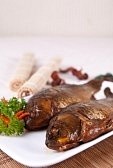
Summer time an’ the livin’ is easy—which means that the grilling/barbecue season is here. But, you know what, kiddies—is it going to be the same old franks, burgers and half-burnt chicken? Now, not that there’s anything wrong with franks, burgers and half-burnt chicken. But why not try something different and out-of-the ordinary, like grilling fish? You heard it right: fish, like in seafood. Fish is perfect for barbecuing and grilling. It’s moist, delicious and easy to cook. Probably easier than grilling a steak.

Definitions are in order here. To my mind, grilling is just that: roasting meat outdoors over an open fire, grill, framework, or pit. Barbecue is when you add a highly seasoned sauce. So, wanna barbecue fish? Just add your favorite BBQ sauce. It’ll probably be better for you than some contaminated, e-coli meat.

Below are given two simple but scrumptious (I love the word) fish dishes. Both are made with what in the Old World is known as “al salmoriglio”—with an oil and lemon sauce. Better tasting and healthier for you, believe me. Both recipes can be cooked on a charcoal grill, brazier, or gas grill. In each case, preheat the brazier or grill. If you don’t have an backyard and a grill, you can also cook the fish in a broiler. In the first recipe given, you have to marinate the fish. This gives it a richer flavor. In the second recipe, marinating is not necessary, if you’re in a hurry. Both recipes will yield about 4 servings.

PESCE AL SALMORIGLIO (Fish steaks with oil and lemon sauce)

Recipe I:

In a covered bowl or container, combine 1/2 cup fresh lemon juice, 1/4 cup olive oil, 2 minced garlic cloves, 1/2 cup fresh chopped basil, 1 tablespoon dried oregano, salt and pepper to taste. Mix well. Add to the marinade 2 pounds fish steaks (swordfish, salmon, cod, halibut, or tile fish) cut crosswise into 1/2-inch thick pieces. Refrigerate for 3 hours or, better yet, overnight. Turn fish several times in the marinade. Preheat grill; and brush grill with a little olive oil. When grill is quite hot, place fish steaks on grill and cook quickly over high heat. The fish should be close to the surface heat, and it should take about 2 minutes to cook on one side. Turn over quickly but carefully and cook about 2 minutes or slightly longer on the other side. Do not overcook or fish steaks will become too dry. Remove fish from grill and serve with lemon wedges, if desired.

Recipe II:

In a small bowl, combine 1/2 cup fresh lemon juice, 1/4 cup olive oil, 2 minced garlic cloves, 1 tablespoon dried oregano, salt and pepper to taste. (Note: in this recipe, the basil is optional.) Mix well and set aside. Preheat grill; and brush grill with a little olive oil. Grill fish as noted above in recipe I. Transfer to a warm platter and pour oil and lemon sauce over the fish.

There you have, friends. Now you can truly impress your neighbors and loved ones the next time you use the old grill.

Enhanced by Zemanta
Older posts Newer posts

© 2026 Oswald Rivera

Theme by Anders NorenUp ↑